Red Sea Crisis Escalates: Slaughtering Lines Shipments Delayed by 22 Days on Average
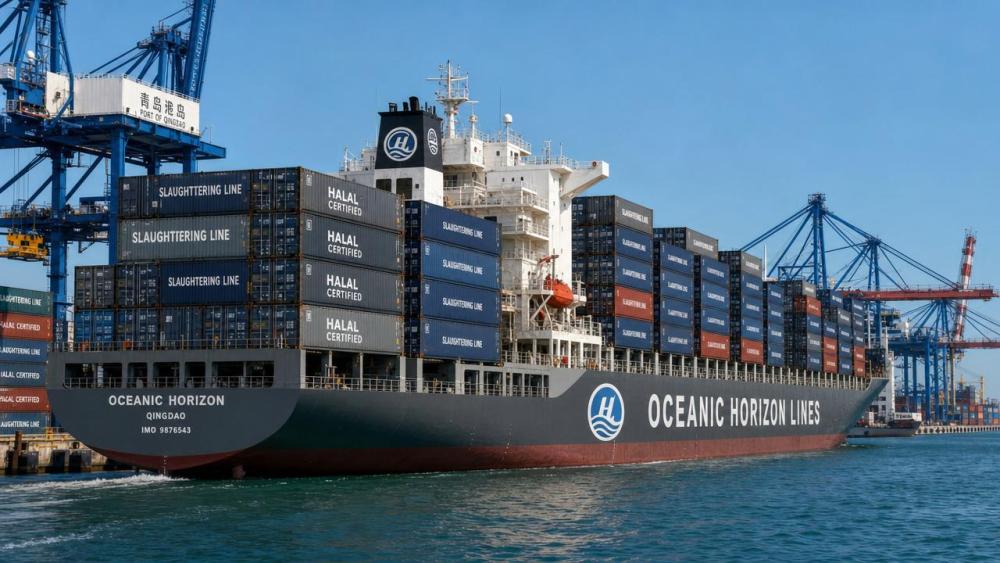
On 28 May 2026, Maersk Line’s latest fleet capacity bulletin confirmed that ongoing Houthi militant attacks in the Red Sea have forced 73% of Asia–Europe vessels transporting meat processing equipment to reroute via the Cape of Good Hope — triggering significant delivery delays for Chinese-exported slaughtering lines and raising contractual risks for Middle Eastern buyers.
Confirmed Operational Impact
According to Maersk Line’s 28 May 2026 capacity update, sustained security threats in the Red Sea region have led to a widespread rerouting decision among carriers servicing the Asia–Europe corridor. As a result, the average maritime transit time for Chinese exports of slaughtering lines has increased from 38 days to 60 days — a 22-day extension. At Qingdao Port, three container vessels carrying bowl cutters and stuffers are currently experiencing demurrage. Several export orders bound for Middle Eastern markets are now at heightened risk of contractual non-performance.
Supply Chain Implications Across Stakeholder Roles
Export Trading Companies
These firms face direct pressure on delivery commitments and incurrence of demurrage, detention, and penalty clauses. The extended lead time affects their ability to meet agreed-upon shipment windows — especially under Incoterms® such as FOB or CIF, where timing obligations are contractually binding.
Raw Material Suppliers
Suppliers of critical components (e.g., stainless-steel blades, pneumatic actuators, food-grade lubricants) must now align production and inventory planning with extended logistics cycles. Just-in-time replenishment models are increasingly vulnerable without buffer stock visibility or revised procurement calendars.
Equipment Manufacturers
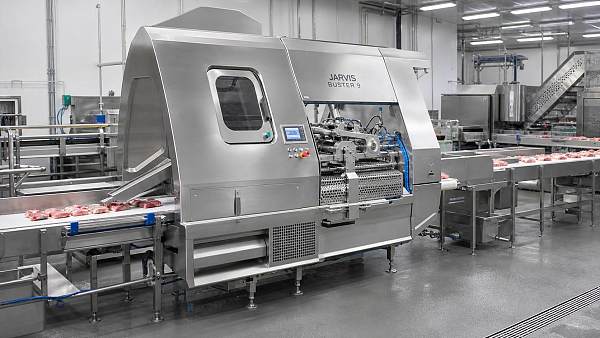
Manufacturers of slaughtering lines, bowl cutters, and stuffers confront cascading scheduling disruptions — from final assembly sequencing to factory acceptance testing (FAT) coordination and documentation handover. Longer port dwell times also increase exposure to cargo handling damage and customs clearance delays.
Logistics & Freight Forwarding Providers
Third-party logistics partners must reassess routing protocols, insurance coverage scope, and contingency planning for alternative transshipment hubs (e.g., Rotterdam, Jebel Ali). Real-time vessel tracking integration and proactive client communication on revised ETAs have become essential service expectations.
Strategic Priorities for Enterprise Response
Reassess Delivery Commitments and Contract Clauses
Review force majeure provisions, laytime/demurrage terms, and liquidated damages schedules in active contracts — particularly for Middle Eastern buyers. Consider formal notification procedures and evidence documentation (e.g., carrier advisories, port authority notices) to support contractual relief claims.
Optimize Inventory and Component Readiness
Pre-position high-turnover subassemblies (e.g., control panels, feed screws, sealing gaskets) ahead of anticipated vessel departures. Align raw material procurement with extended shipping windows — especially for components subject to long lead times or single-source supply.
Strengthen Technical Documentation and Certification Alignment
Ensure all CE marking documentation, PED 2014/68/EU conformity assessments, and HALAL-compliant design verification reports are finalized and digitized prior to shipment. Anticipate additional scrutiny during customs clearance in GCC countries due to extended transit durations.
Expand Carrier and Route Diversification
Evaluate multimodal alternatives — including rail-ferry combinations (e.g., China–Europe rail + Baltic Sea ferry) and air freight for time-critical spares — while monitoring evolving sanctions compliance requirements and war risk insurance premiums.
Industry Observation: Beyond Transit Delays
Analysis shows this disruption is accelerating structural shifts in global meat processing equipment sourcing. Observably, buyers are beginning to prioritize suppliers with dual-port export capability (e.g., Qingdao + Nansha), regional warehousing, and modular design approaches that allow partial shipment and on-site commissioning. It is more appropriate to understand this as a catalyst for re-evaluating total landed cost — not just unit price — including insurance, financing, and inventory carrying costs over extended cycle times. What deserves closer attention is how certification validity periods (e.g., CE, ISO 22000) intersect with prolonged shipping and storage conditions, potentially triggering revalidation requirements upon arrival.
Long-Term Industry Significance
This incident underscores that geopolitical volatility is no longer a peripheral risk factor but a core determinant of equipment delivery reliability, compliance readiness, and contractual resilience in the global food processing machinery sector. Sustainable competitiveness will increasingly hinge on integrated risk intelligence — combining real-time trade route analytics, regulatory horizon scanning, and modular product architecture — rather than solely on manufacturing scale or pricing.
Source Attribution and Monitoring Guidance
This article was generated exclusively from the user-provided title, event date (28 May 2026), and summary text. Specific official source links were not provided in the input and should be verified continuously. Stakeholders are advised to monitor updates from Maersk Line, the International Maritime Organization (IMO), the European Union’s Integrated Maritime Policy portal, and national customs authorities for evolving guidance on war risk declarations, cargo insurance mandates, and documentation requirements. Continued observation is warranted for adjustments in classification society survey protocols, GCC import licensing timelines, and buyer-side tender amendments reflecting new logistical realities.
Related News
 How Freeze Drying Technology for Coffee Preserves Aroma and Improves Shelf LifeDiscover how freeze drying technology for coffee preserves aroma, improves shelf life, and supports premium quality with smart processing and packaging insights.
 FDA Sets CIP/SIP Flow Validation Rule for 2026FDA Sets CIP/SIP Flow Validation Rule for 2026: learn how the new FDA update impacts food equipment exports, EHEDG 42:2025 compliance, supplier audits, and U.S. market readiness.
 How to Choose Stainless Steel Deboning Equipment for Throughput, Hygiene, and YieldStainless steel deboning equipment buying guide: learn how to balance throughput, hygiene, and yield to cut downtime, protect food safety, and improve processing profits.
 EU Tightens MAP Gas Certification From October 2026EU Tightens MAP Gas Certification From October 2026: learn how EN 14185-2:2026, traceable batch data, and stability reports will impact MAP suppliers, importers, and market access.
 Vacuum Freeze Drying for Probiotics: Process Basics, Benefits, and Key LimitsVacuum freeze drying for probiotics explained: learn process basics, key benefits, major limits, and how to evaluate viability, cost, packaging, and scale-up before choosing this method.
 FDA Expands 3A Mutual Recognition for Food Machinery SealsFDA expands 3A mutual recognition for food machinery seals, reshaping U.S. compliance for sanitary equipment. Learn the impact on exporters, buyers, and certification workflows.
 How to Evaluate a Bottle Filling Equipment Manufacturer for Accuracy, Hygiene, and ThroughputBottle filling equipment manufacturer selection starts with proven accuracy, hygienic design, and sustainable throughput. Learn what to verify before you buy with this practical guide.
 EU Rule Sets MAP Sensor Requirement for ImportsEU Rule Sets MAP Sensor Requirement for Imports: learn how the new EU MAP equipment rule impacts CE compliance, validation data, delivery timelines, and supplier readiness before August 1, 2026.
 Commercial Food Processing Hygiene Checklist for Audits, Zoning and Allergen ControlCommercial food processing hygiene checklist for audits, zoning, and allergen control. Learn practical steps to improve compliance, reduce risk, and strengthen plant performance.
 High Efficiency Food Manufacturing: Where Throughput Gains Offset Equipment CostHigh efficiency food manufacturing turns equipment cost into margin through higher throughput, lower waste, better hygiene, and longer shelf life. See what drives faster ROI.
 Dough Processing Machinery for Pizza: What to Compare Before Choosing a LineDough processing machinery for pizza: compare dough handling, sanitation, throughput, flexibility, and operating cost before choosing a line that protects quality and boosts ROI.
 Energy Efficient Vacuum Drying: Key Parameters, Limits and Best-Fit MaterialsEnergy efficient vacuum drying explained: learn the key parameters, practical limits, and best-fit materials to improve product quality, sanitation, and operating efficiency.