EU Tightens CE Requirements for Vacuum Freeze Dryers Effective June 2026
On 29 May 2026, the European Commission adopted Regulation (EU) 2026/873, introducing three new mandatory CE compliance requirements for vacuum freeze dryers entering the EU market from 1 June 2026. The update significantly affects Chinese manufacturers exporting such equipment, reshaping technical documentation, type-testing protocols, and final inspection procedures.
New Mandatory CE Compliance Criteria
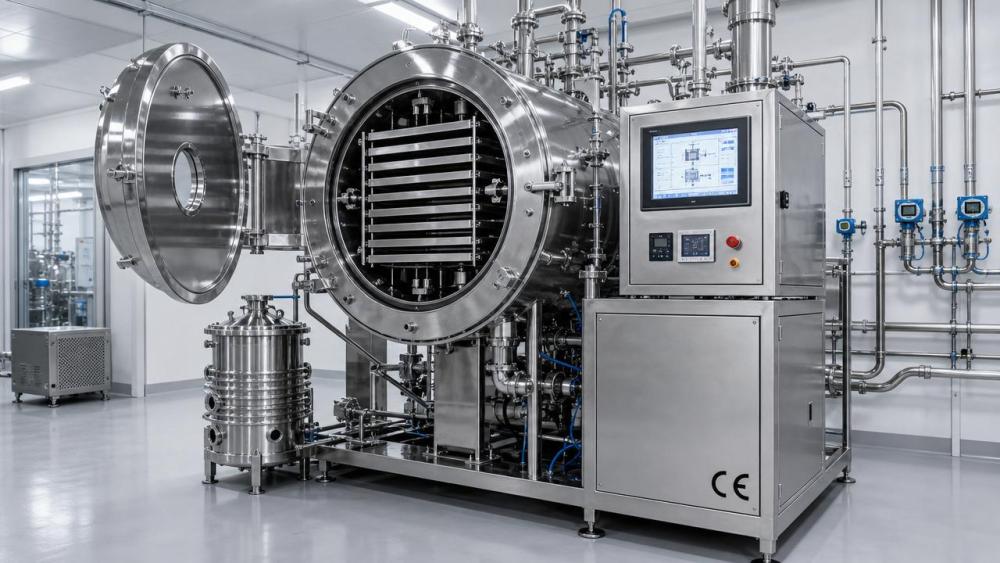
The revised regulation mandates the following technical requirements for all vacuum freeze dryers placed on the EU market as of 1 June 2026:
- Thermal distribution uniformity within ±1.5% deviation across the drying chamber;
- Real-time monitoring of residual water vapour pressure in the condenser (cold trap);
- Immutable PLC data logging with embedded timestamps and operator identification (ID).
These provisions are binding under the Machinery Regulation (EU) 2023/1230 and apply to all devices subject to CE marking for vacuum freeze drying applications.
Impact Across Supply Chain Roles
Export-Oriented Equipment Manufacturers
Manufacturers must now integrate new validation protocols into design verification and production testing. The thermal uniformity requirement demands recalibration of heating/cooling subsystems and updated thermal mapping reports. Non-compliant legacy designs require requalification before export.
Component Suppliers & Subsystem Integrators
Suppliers of PLC controllers, pressure sensors, and thermal calibration modules face tighter specification alignment. Components must support tamper-proof data storage and real-time vapour pressure readouts traceable to EN 61508 (functional safety) and EN 62061 (machinery control systems).
Technical Documentation & Certification Service Providers
Notified Bodies and third-party test labs must revise their type-examination checklists and technical file review templates. The new criteria necessitate expanded scope in risk assessments, software verification reports, and traceability audits — particularly for data integrity controls.
Importers & EU Authorised Representatives
EU-based importers bear increased responsibility for verifying conformity evidence. They must confirm that technical files include validated thermal maps, cold-trap sensor calibration certificates, and PLC firmware audit logs — all compliant with Annex II of Regulation (EU) 2023/1230.
Key Compliance Actions for Exporters
Update Type-Testing Protocols Immediately
Existing type-test reports are no longer sufficient. Manufacturers must conduct new thermal distribution tests per ISO 14644-3 (or equivalent), validate cold-trap sensor accuracy against certified reference standards, and perform full PLC data-integrity stress testing — including power-loss recovery and timestamp synchronization checks.
Restructure Technical Documentation Architecture
Technical files must now include a dedicated ‘Data Integrity Dossier’ containing firmware version logs, secure boot verification records, and operator access control schematics. The structure must align with the latest guidance issued by the European Coordination Group for Notified Bodies (ECGNB) on digital evidence handling.
Revise Final Inspection & Factory Acceptance Procedures
Pre-shipment inspections must verify physical implementation of immutable logging (e.g., write-protected memory chips), sensor mounting positions for representative vapour pressure measurement, and chamber-mounted thermocouple grid density per EN 14644-3 Annex B. Records must be signed off by both QA and a designated compliance officer.
Industry Perspective: Beyond Compliance to Capability Shift
Analysis shows this revision signals a broader shift toward data-driven regulatory enforcement in industrial machinery. From an industry perspective, the focus on tamper-proof PLC logging and real-time process parameter monitoring reflects growing EU emphasis on lifecycle traceability — not just static safety — as a core element of market surveillance. Observably, manufacturers lacking embedded system validation expertise will face extended time-to-certification cycles, while those investing early in IEC 62443-aligned cybersecurity practices gain a tangible advantage in audit readiness. What deserves closer attention is the implicit expectation that freeze dryer OEMs assume responsibility for end-to-end data integrity — extending beyond hardware to firmware architecture and user role management.
Strategic Implications for Global Equipment Markets
This regulation reinforces the EU’s role as a de facto standard-setter for advanced pharmaceutical and biotech processing equipment. While formally limited to CE marking, its technical benchmarks — especially the ±1.5% thermal uniformity threshold — are already being referenced in tender specifications across Singapore, South Korea, and GCC countries. For exporters, it marks the transition from viewing CE as a market-entry gate to treating it as an ongoing operational discipline — requiring cross-functional coordination between R&D, quality assurance, and regulatory affairs teams.
Source Verification Notice
This article is based exclusively on the title, event date (29 May 2026), and summary provided by the user. Specific official source links were not provided in the input and should be verified continuously. Stakeholders are advised to monitor updates from the European Commission’s Official Journal, the NANDO database of Notified Bodies, and forthcoming guidance documents from the ECGNB. Further observation is warranted regarding national market surveillance authority interpretations, potential transitional arrangements for pending shipments, and evolving expectations for post-market surveillance reporting related to PLC data integrity failures.
Related News
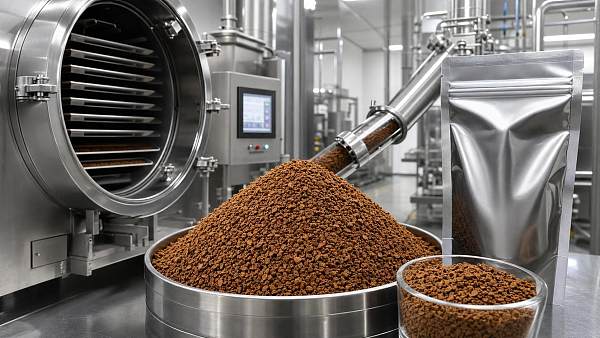
 How Freeze Drying Technology for Coffee Preserves Aroma and Improves Shelf LifeDiscover how freeze drying technology for coffee preserves aroma, improves shelf life, and supports premium quality with smart processing and packaging insights.
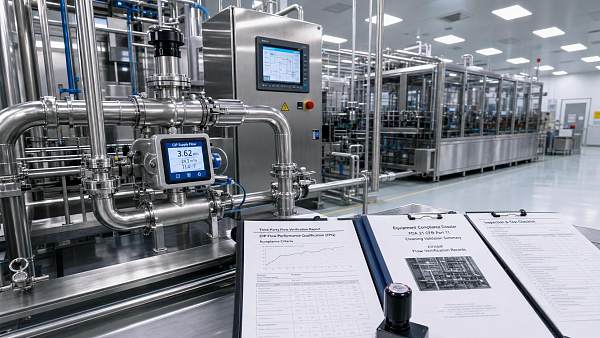
 FDA Sets CIP/SIP Flow Validation Rule for 2026FDA Sets CIP/SIP Flow Validation Rule for 2026: learn how the new FDA update impacts food equipment exports, EHEDG 42:2025 compliance, supplier audits, and U.S. market readiness.
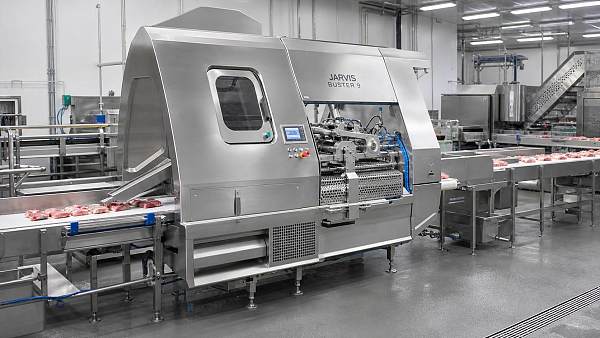
 How to Choose Stainless Steel Deboning Equipment for Throughput, Hygiene, and YieldStainless steel deboning equipment buying guide: learn how to balance throughput, hygiene, and yield to cut downtime, protect food safety, and improve processing profits.
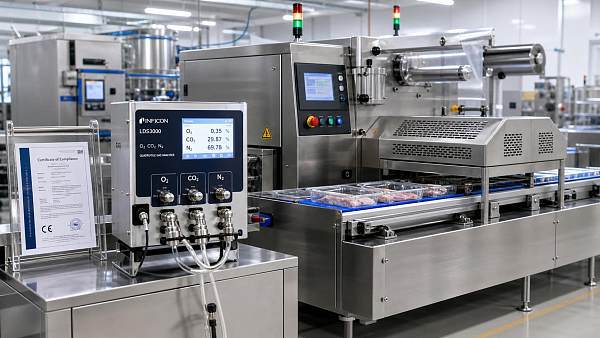
 EU Tightens MAP Gas Certification From October 2026EU Tightens MAP Gas Certification From October 2026: learn how EN 14185-2:2026, traceable batch data, and stability reports will impact MAP suppliers, importers, and market access.
 Vacuum Freeze Drying for Probiotics: Process Basics, Benefits, and Key LimitsVacuum freeze drying for probiotics explained: learn process basics, key benefits, major limits, and how to evaluate viability, cost, packaging, and scale-up before choosing this method.
 FDA Expands 3A Mutual Recognition for Food Machinery SealsFDA expands 3A mutual recognition for food machinery seals, reshaping U.S. compliance for sanitary equipment. Learn the impact on exporters, buyers, and certification workflows.
 How to Evaluate a Bottle Filling Equipment Manufacturer for Accuracy, Hygiene, and ThroughputBottle filling equipment manufacturer selection starts with proven accuracy, hygienic design, and sustainable throughput. Learn what to verify before you buy with this practical guide.
 EU Rule Sets MAP Sensor Requirement for ImportsEU Rule Sets MAP Sensor Requirement for Imports: learn how the new EU MAP equipment rule impacts CE compliance, validation data, delivery timelines, and supplier readiness before August 1, 2026.
 Commercial Food Processing Hygiene Checklist for Audits, Zoning and Allergen ControlCommercial food processing hygiene checklist for audits, zoning, and allergen control. Learn practical steps to improve compliance, reduce risk, and strengthen plant performance.
 High Efficiency Food Manufacturing: Where Throughput Gains Offset Equipment CostHigh efficiency food manufacturing turns equipment cost into margin through higher throughput, lower waste, better hygiene, and longer shelf life. See what drives faster ROI.
 Dough Processing Machinery for Pizza: What to Compare Before Choosing a LineDough processing machinery for pizza: compare dough handling, sanitation, throughput, flexibility, and operating cost before choosing a line that protects quality and boosts ROI.
 Energy Efficient Vacuum Drying: Key Parameters, Limits and Best-Fit MaterialsEnergy efficient vacuum drying explained: learn the key parameters, practical limits, and best-fit materials to improve product quality, sanitation, and operating efficiency.