FDA Finalizes Freeze-Drying Equipment Validation Guidance with PAT Focus
FDA issued the final Guidance for Industry: Validation of Vacuum Freeze Drying Equipment Used in Human Food Manufacturing on May 28, 2026 — marking the first U.S. regulatory framework to explicitly require process analytical technology (PAT) parameters for continuous lyophilization chambers in food manufacturing. This guidance is especially relevant for frozen-food processors, functional ingredient suppliers, and export-oriented food manufacturers targeting the U.S. market.
Event Overview
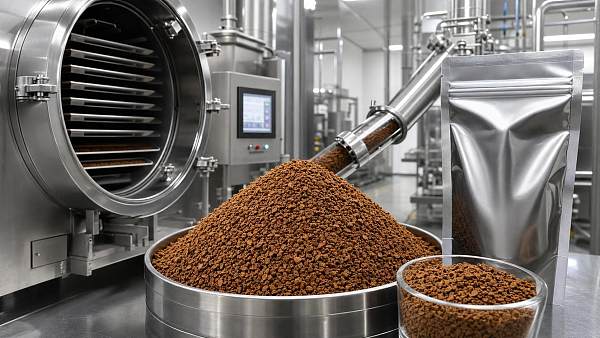
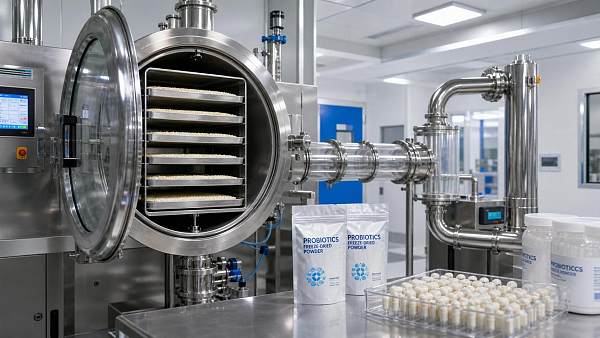
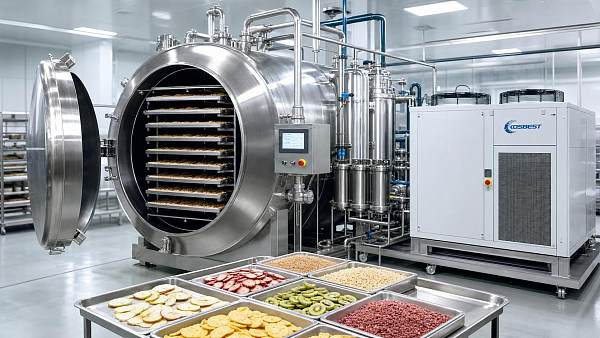
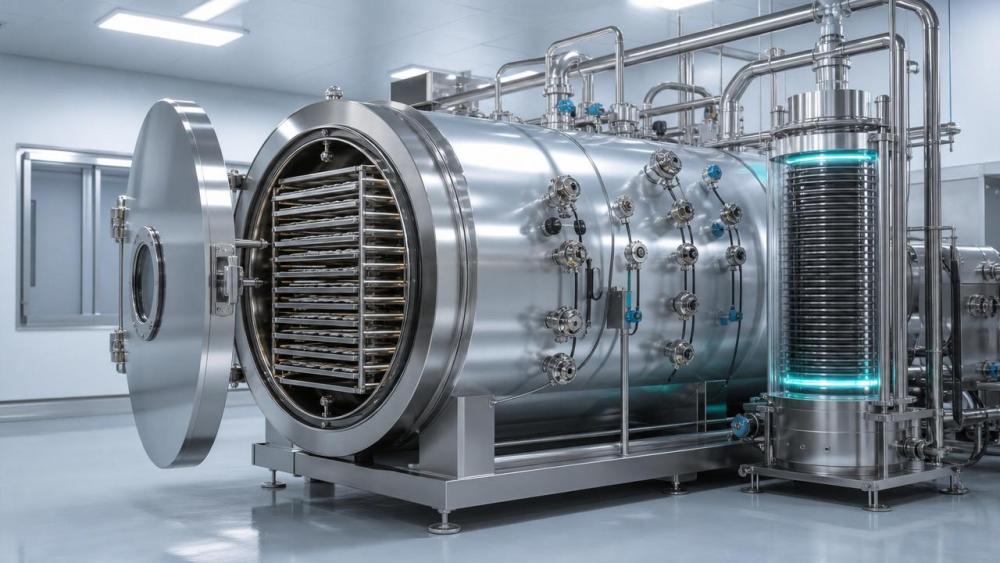
On May 28, 2026, the U.S. Food and Drug Administration (FDA) published the final version of its Guidance for Industry: Validation of Vacuum Freeze Drying Equipment Used in Human Food Manufacturing. The document specifies that validation of continuous lyo-chambers must include three key PAT-based parameters: real-time temperature gradient scanning across the chamber, dynamic pressure fluctuation compensation, and AI-predicted cold trap frost thickness. Manufacturers are required to submit a full-cycle PAT data package covering no fewer than three consecutive production batches. Although non-binding, the guidance has been incorporated into FDA’s import alert review criteria.
Industries Affected by Segment
Food Processing & Manufacturing Firms
These firms directly operate or specify freeze-drying equipment. They face new validation expectations when installing or qualifying continuous lyo-chambers — particularly where PAT integration was previously optional or absent. Impact includes increased pre-commercialization validation burden, potential requalification of existing lines, and tighter documentation requirements for FDA-regulated exports.
Equipment Suppliers & Engineering Contractors
Suppliers of continuous lyophilization systems must now align product specifications and commissioning protocols with FDA’s PAT parameter definitions. Impact manifests in updated technical documentation, enhanced sensor calibration workflows, and expanded support for AI-driven frost-thickness modeling — all of which may affect delivery timelines and service contracts.
U.S.-Bound Exporters (Especially from Asia & Latin America)
Exporters relying on freeze-dried products (e.g., fruits, herbs, probiotics, ready-to-eat meals) may encounter heightened scrutiny during FDA import reviews. Since the guidance is embedded in import alert benchmarks, non-submission of compliant PAT data packages could trigger detention without physical examination — even if the product itself meets compositional standards.
Contract Manufacturing Organizations (CMOs)
CMOs serving branded food clients must now disclose PAT validation capabilities and batch-level data readiness as part of client onboarding or audit preparation. Failure to demonstrate adherence may limit access to U.S.-focused clients seeking supply chain compliance assurance.
What Stakeholders Should Monitor and Do Now
Track FDA’s Implementation Clarifications
While the guidance is final, FDA may issue Q&A documents or hold industry webinars later in 2026. Observably, early adopters should monitor FDA’s CFSAN updates and sign up for relevant stakeholder notifications.
Review Current Lyophilization Lines Against PAT Requirements
Manufacturers operating continuous lyo-chambers should conduct gap assessments — specifically evaluating whether their systems capture temperature gradients at ≥5 spatial points, log pressure transients at ≤1-second intervals, and integrate validated AI models for cold trap monitoring. Analysis shows most legacy installations lack native capability in at least one of these areas.
Distinguish Between Regulatory Signal and Enforcement Threshold
This guidance is non-mandatory but serves as an enforceable benchmark under import review. It is more accurately understood as a procedural expectation than a legal mandate — yet failure to meet it increases risk exposure during FDA field inspections or port-of-entry evaluations.
Prepare PAT Data Packages for High-Risk Export Batches
For products already in FDA import alert categories (e.g., dried botanicals, infant foods), companies should prioritize generating and archiving PAT data packages for at least three recent commercial batches — beginning with those destined for U.S. entry in Q3–Q4 2026.
Editorial Perspective / Industry Observation
Observably, this guidance signals FDA’s broader shift toward data-driven, real-time verification in food process controls — extending PAT principles beyond pharmaceuticals into high-value food manufacturing. It does not represent immediate enforcement action, but rather establishes a clear benchmark against which future inspections and import decisions will be measured. From an industry perspective, it reflects growing regulatory attention on equipment-level process consistency — especially where thermal history and moisture removal dynamics directly impact safety and shelf life. Continued observation is warranted on how FDA applies this guidance during routine facility inspections and whether it evolves into formal rulemaking post-2027.
Conclusion: The issuance of this guidance represents a procedural milestone — not a sudden compliance deadline — but one that reshapes validation expectations for freeze-drying in U.S.-regulated food supply chains. It is best understood as a forward-looking standard: adoption timing varies by business risk profile, but alignment is increasingly essential for sustained market access.
Source: U.S. Food and Drug Administration (FDA), Guidance for Industry: Validation of Vacuum Freeze Drying Equipment Used in Human Food Manufacturing, final version issued May 28, 2026.
Further observation is recommended regarding potential FDA implementation FAQs and inspectional use patterns through late 2026.
Related News
 How Freeze Drying Technology for Coffee Preserves Aroma and Improves Shelf LifeDiscover how freeze drying technology for coffee preserves aroma, improves shelf life, and supports premium quality with smart processing and packaging insights.
 FDA Sets CIP/SIP Flow Validation Rule for 2026FDA Sets CIP/SIP Flow Validation Rule for 2026: learn how the new FDA update impacts food equipment exports, EHEDG 42:2025 compliance, supplier audits, and U.S. market readiness.
 How to Choose Stainless Steel Deboning Equipment for Throughput, Hygiene, and YieldStainless steel deboning equipment buying guide: learn how to balance throughput, hygiene, and yield to cut downtime, protect food safety, and improve processing profits.
 EU Tightens MAP Gas Certification From October 2026EU Tightens MAP Gas Certification From October 2026: learn how EN 14185-2:2026, traceable batch data, and stability reports will impact MAP suppliers, importers, and market access.
 Vacuum Freeze Drying for Probiotics: Process Basics, Benefits, and Key LimitsVacuum freeze drying for probiotics explained: learn process basics, key benefits, major limits, and how to evaluate viability, cost, packaging, and scale-up before choosing this method.
 FDA Expands 3A Mutual Recognition for Food Machinery SealsFDA expands 3A mutual recognition for food machinery seals, reshaping U.S. compliance for sanitary equipment. Learn the impact on exporters, buyers, and certification workflows.
 How to Evaluate a Bottle Filling Equipment Manufacturer for Accuracy, Hygiene, and ThroughputBottle filling equipment manufacturer selection starts with proven accuracy, hygienic design, and sustainable throughput. Learn what to verify before you buy with this practical guide.
 EU Rule Sets MAP Sensor Requirement for ImportsEU Rule Sets MAP Sensor Requirement for Imports: learn how the new EU MAP equipment rule impacts CE compliance, validation data, delivery timelines, and supplier readiness before August 1, 2026.
 Commercial Food Processing Hygiene Checklist for Audits, Zoning and Allergen ControlCommercial food processing hygiene checklist for audits, zoning, and allergen control. Learn practical steps to improve compliance, reduce risk, and strengthen plant performance.
 High Efficiency Food Manufacturing: Where Throughput Gains Offset Equipment CostHigh efficiency food manufacturing turns equipment cost into margin through higher throughput, lower waste, better hygiene, and longer shelf life. See what drives faster ROI.
 Dough Processing Machinery for Pizza: What to Compare Before Choosing a LineDough processing machinery for pizza: compare dough handling, sanitation, throughput, flexibility, and operating cost before choosing a line that protects quality and boosts ROI.
 Energy Efficient Vacuum Drying: Key Parameters, Limits and Best-Fit MaterialsEnergy efficient vacuum drying explained: learn the key parameters, practical limits, and best-fit materials to improve product quality, sanitation, and operating efficiency.