TÜV Rheinland Launches First SAL Classification for Aseptic Cold Filling Systems
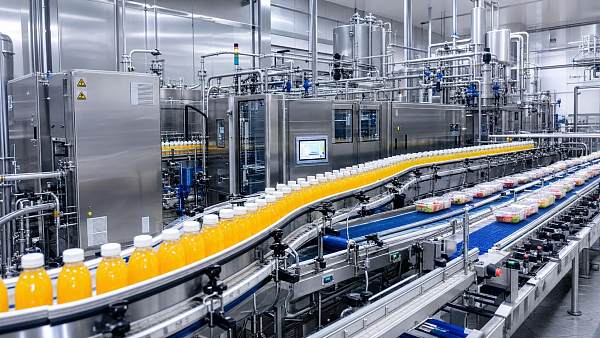
On 28 May 2026, German certification body TÜV Rheinland released the Aseptic Cold Filling Systems Sterility Assurance Level (SAL) Classification v1.0, introducing a standardized four-tier grading system for aseptic cold filling lines. The framework incorporates 12 precision parameters—including fill valve seal integrity, CIP return flow velocity gradients, and HEPA-filtered sterile air pressure differentials—into SAL Levels 1–4. Exporters of cold filling equipment from China must complete SAL classification certification by Q3 2026 to retain eligibility for new EU orders. This development is especially relevant for manufacturers and suppliers in beverage, dairy, plant-based, and pharmaceutical liquid packaging sectors.
Event Overview
On 28 May 2026, TÜV Rheinland published the Aseptic Cold Filling Systems Sterility Assurance Level (SAL) Classification v1.0. The document establishes the first formal, parameter-based SAL grading system for aseptic cold filling technology. It defines four tiers (SAL 1 to SAL 4), each anchored to measurable thermodynamic and fluid-dynamic criteria—including but not limited to fill valve sealing performance, CIP rinse flow profile consistency, and sustained differential pressure across sterile air HEPA filters. The standard applies to equipment supplied to the European Union. Chinese manufacturers exporting such systems are required to obtain SAL classification certification before the end of Q3 2026; failure to do so may restrict access to new EU procurement opportunities.
Impact on Specific Industry Segments
Equipment Exporters (China-based)
Chinese manufacturers supplying aseptic cold filling lines to EU customers face direct compliance obligations. Certification is not voluntary—it is tied to order eligibility. Impact manifests primarily in pre-shipment validation timelines, technical documentation requirements, and potential redesign or recalibration of existing line configurations to meet SAL-specific thresholds.
Contract Packaging Service Providers (EU & UK)
These operators rely on certified aseptic lines to fulfill customer contracts for sensitive products (e.g., shelf-stable juices, dairy alternatives, functional beverages). Under the new framework, their equipment vendors must provide verified SAL ratings. Absence of valid SAL classification may trigger contractual re-evaluation, insurance reassessment, or audit non-conformities during GMP or BRCGS reviews.
Food & Beverage Brand Owners (Exporting to EU)
Brands sourcing co-packing services or procuring in-house filling systems must now assess SAL level alignment with product risk profiles. For example, low-acid plant milks or ready-to-drink probiotic beverages may require SAL 3 or 4-rated infrastructure. This adds a new layer to supplier qualification and site approval processes.
Validation & Compliance Consultancies
Firms supporting clients with regulatory readiness will need to integrate SAL classification protocols into existing aseptic process validation frameworks. This includes adapting test plans for valve seal challenge studies, CIP flow mapping, and sterile air pressure decay analysis—now aligned with defined SAL thresholds rather than generalized best practices.
What Affected Enterprises Should Monitor and Do Now
Track official implementation guidance from TÜV Rheinland and EU notified bodies
The v1.0 document outlines criteria but does not yet specify accredited testing labs, sampling frequency, or pass/fail tolerance bands per parameter. Enterprises should monitor updates issued by TÜV Rheinland and EU national accreditation bodies (e.g., DAkkS) regarding recognized test methods and certification pathways.
Prioritize assessment of current equipment against SAL 1–4 parameter thresholds
Manufacturers and users should conduct internal gap analyses—notably on fill valve leak rates under thermal cycling, CIP return loop velocity uniformity, and HEPA filter bank pressure differential stability during full-line operation. These 12 parameters are quantitatively defined; qualitative assessments are insufficient for SAL classification.
Distinguish between certification deadlines and operational readiness timelines
The Q3 2026 deadline applies to certification submission—not necessarily full system retrofitting. However, SAL classification requires documented evidence from representative production runs. Enterprises should initiate data collection and baseline measurement no later than Q2 2026 to avoid timeline compression.
Engage early with TÜV Rheinland or authorized partners on pre-assessment support
While formal certification requires third-party verification, preliminary technical reviews—especially for valve design, CIP control logic, and sterile air system schematics—can identify high-risk areas ahead of formal audit. Early engagement helps align engineering documentation with SAL reporting formats.
Editorial Perspective / Industry Observation
Observably, this is not merely a technical update but an institutional signal: the EU regulatory ecosystem is shifting toward outcome-based, parameter-driven assurance for aseptic processing—moving beyond legacy sterilization cycle validation alone. Analysis shows that SAL classification functions less as an immediate barrier and more as a structured roadmap for continuous improvement in cold-fill system reliability. From an industry perspective, its significance lies not in enforcement immediacy, but in how it reshapes long-term expectations for equipment transparency, data traceability, and cross-border technical harmonization. Current adoption remains voluntary for non-exporting facilities—but market pull from EU-based brand owners is likely to accelerate uptake globally.

Conclusion: The introduction of TÜV Rheinland’s SAL classification represents a formalized step toward quantifiable sterility assurance in cold filling—a domain historically reliant on procedural controls and empirical experience. It does not replace existing hygiene or validation standards, but layers objective, physics-based metrics onto them. For stakeholders, this is best understood not as a sudden regulatory shock, but as an emerging benchmark for technical maturity in liquid aseptic processing. Proactive alignment—grounded in measurement, documentation, and dialogue with certifiers—is more strategic than reactive compliance.
Source: TÜV Rheinland, Aseptic Cold Filling Systems Sterility Assurance Level (SAL) Classification v1.0, published 28 May 2026.
Note: Implementation details—including accredited laboratories, audit scope definitions, and transitional arrangements—are pending further guidance from TÜV Rheinland and EU national accreditation authorities. These remain under observation.
Related News
 How Freeze Drying Technology for Coffee Preserves Aroma and Improves Shelf LifeDiscover how freeze drying technology for coffee preserves aroma, improves shelf life, and supports premium quality with smart processing and packaging insights.
 FDA Sets CIP/SIP Flow Validation Rule for 2026FDA Sets CIP/SIP Flow Validation Rule for 2026: learn how the new FDA update impacts food equipment exports, EHEDG 42:2025 compliance, supplier audits, and U.S. market readiness.
 How to Choose Stainless Steel Deboning Equipment for Throughput, Hygiene, and YieldStainless steel deboning equipment buying guide: learn how to balance throughput, hygiene, and yield to cut downtime, protect food safety, and improve processing profits.
 EU Tightens MAP Gas Certification From October 2026EU Tightens MAP Gas Certification From October 2026: learn how EN 14185-2:2026, traceable batch data, and stability reports will impact MAP suppliers, importers, and market access.
 Vacuum Freeze Drying for Probiotics: Process Basics, Benefits, and Key LimitsVacuum freeze drying for probiotics explained: learn process basics, key benefits, major limits, and how to evaluate viability, cost, packaging, and scale-up before choosing this method.
 FDA Expands 3A Mutual Recognition for Food Machinery SealsFDA expands 3A mutual recognition for food machinery seals, reshaping U.S. compliance for sanitary equipment. Learn the impact on exporters, buyers, and certification workflows.
 How to Evaluate a Bottle Filling Equipment Manufacturer for Accuracy, Hygiene, and ThroughputBottle filling equipment manufacturer selection starts with proven accuracy, hygienic design, and sustainable throughput. Learn what to verify before you buy with this practical guide.
 EU Rule Sets MAP Sensor Requirement for ImportsEU Rule Sets MAP Sensor Requirement for Imports: learn how the new EU MAP equipment rule impacts CE compliance, validation data, delivery timelines, and supplier readiness before August 1, 2026.
 Commercial Food Processing Hygiene Checklist for Audits, Zoning and Allergen ControlCommercial food processing hygiene checklist for audits, zoning, and allergen control. Learn practical steps to improve compliance, reduce risk, and strengthen plant performance.
 High Efficiency Food Manufacturing: Where Throughput Gains Offset Equipment CostHigh efficiency food manufacturing turns equipment cost into margin through higher throughput, lower waste, better hygiene, and longer shelf life. See what drives faster ROI.
 Dough Processing Machinery for Pizza: What to Compare Before Choosing a LineDough processing machinery for pizza: compare dough handling, sanitation, throughput, flexibility, and operating cost before choosing a line that protects quality and boosts ROI.
 Energy Efficient Vacuum Drying: Key Parameters, Limits and Best-Fit MaterialsEnergy efficient vacuum drying explained: learn the key parameters, practical limits, and best-fit materials to improve product quality, sanitation, and operating efficiency.