Ningbo Port Launches AI Export Clearance Dashboard
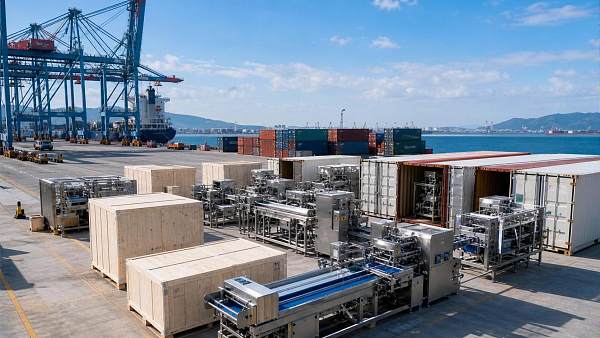
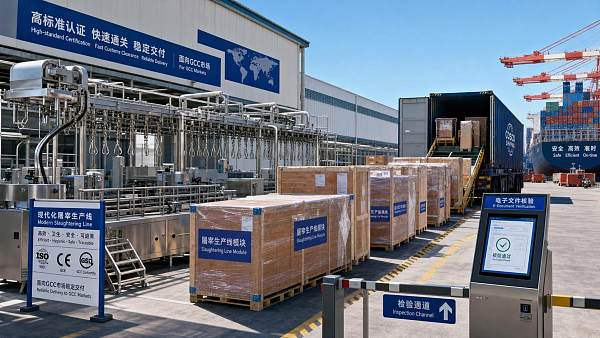
On July 12, 2026, Ningbo Port Group launched an AI-enabled platform called “FMCG Equipment Express Clearance” for exporters of meat processing lines, MAP lines, and freeze-drying equipment. The update matters beyond port operations because it directly affects documentation checks, customs progress visibility, and delivery planning for food machinery exporters, overseas buyers, and supply chain service providers working around time-sensitive export schedules.
What the launch confirms
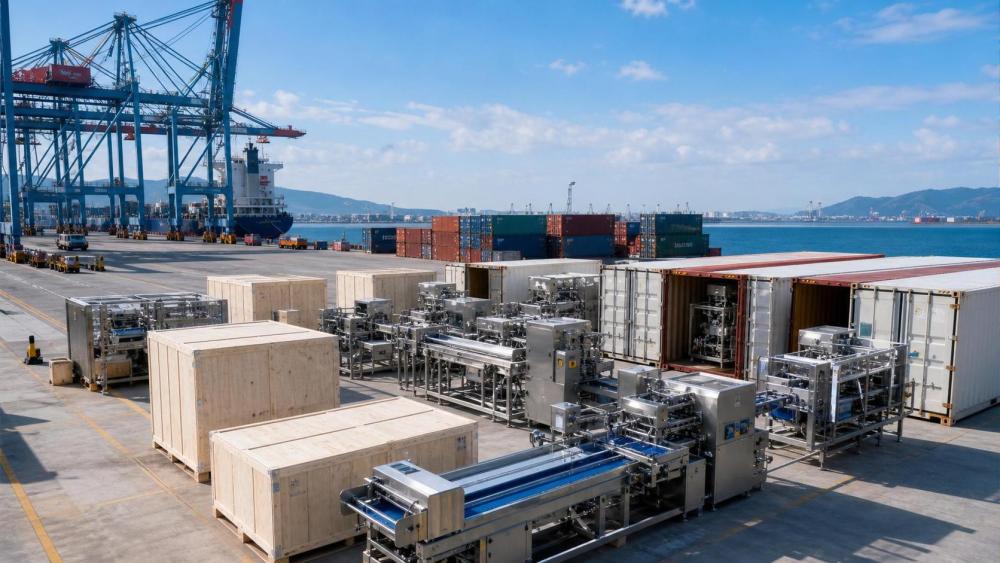
According to the provided event information, the new platform went live on July 12, 2026 and is designed for export-oriented FMCG equipment categories including meat processing lines, MAP production lines, and freeze-drying equipment.
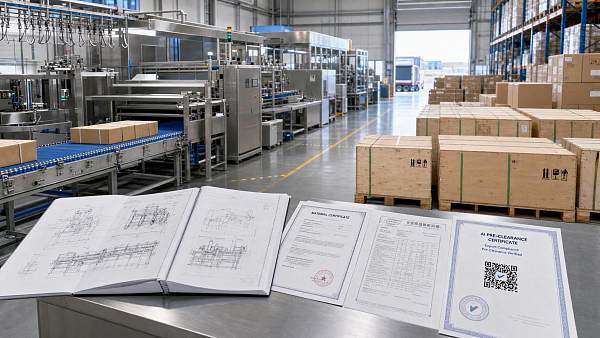
The platform performs automated verification across three document sets: customs declarations, inspection and quarantine certificates, and 3A/FDA certificates. It also provides real-time updates on clearance status.
In its first phase, the system covers 92% of export food machinery orders. The average clearance time has been reduced to 2.3 working days, which is 67% faster than the traditional process.
Where the operational impact may be felt first
Exporting equipment manufacturers will likely see pressure shift from submission speed to document accuracy
From an industry perspective, exporters of meat processing, MAP, and freeze-drying equipment may be the first group to feel the practical effects. If document matching is automated across declarations, inspection records, and 3A/FDA certificates, then the main operational issue may move away from manual follow-up and toward whether internal documentation is prepared in a consistent and machine-verifiable format.
What deserves closer attention is whether faster clearance creates higher expectations around shipment readiness, contract timing, and handover coordination.
Freight and customs service providers may need to adapt their service value
Analysis shows that service providers involved in customs handling and export coordination may be affected in workflow design rather than in trade volume itself. Real-time status updates can reduce uncertainty in tracking, but they can also expose documentation gaps earlier in the process.
The practical impact may appear in exception handling, document pre-check routines, and client communication, especially where multiple certificates must align before release.
Overseas buyers may focus more closely on delivery predictability
For buyers of food machinery, the most relevant issue is not the port technology alone but whether clearance becomes more predictable. A shorter average clearance cycle may help with installation planning, commissioning windows, and import-side coordination, but that depends on whether each shipment is fully aligned with the required documents.
Observably, buyers may pay closer attention to how suppliers explain certification readiness and shipment milestones.
What companies should watch in practice
Check whether certificate data and declaration data are fully aligned
Because the platform is built around automated verification of three document types, companies should pay close attention to consistency between customs declarations, inspection and quarantine certificates, and 3A/FDA certificates. Even where the clearance process is faster overall, mismatched or incomplete records could become more visible.
Separate platform capability from actual shipment performance
Analysis shows that a faster system does not automatically mean every order will clear at the same pace. Companies should distinguish between the announced average performance, first-phase coverage, and the actual handling condition of their own product category, order type, and document set.
Review delivery commitments tied to export food machinery orders
For exporters and project teams, it is worth reassessing customer communication around lead times and shipment milestones. If clearance status is pushed in real time, customers may expect more precise updates, which means internal coordination between compliance, logistics, and sales teams becomes more important.
Watch for further clarification in official wording and operating rules
What deserves closer attention is whether follow-up guidance clarifies scope, exceptions, or operating standards for the covered equipment categories. The launch confirms the system is active, but companies still need to monitor how the process is described and applied in day-to-day export work.
Why this looks like a process signal, not just a one-off port update
As an editorial observation, this development is more meaningful as a signal about how export processing for food machinery is being organized: less around manual document circulation and more around cross-document verification and status transparency.
At the same time, it is more appropriate to understand this as an operational signal rather than a completed industry outcome. The available information confirms launch scope, document functions, order coverage, and time savings, but it does not yet establish how uniformly the benefits will translate across every exporter, shipment profile, or destination requirement.
How to read this update now
At this stage, the Ningbo Port launch is best understood as a concrete short-term efficiency change with possible longer-term implications for export documentation discipline in food machinery trade. The confirmed improvement in clearance time is material, but the broader industry meaning depends on how consistently companies can align certification, declaration, and shipment execution under the new process.
In practical terms, the update deserves attention from exporters, customs service teams, and buyers that rely on predictable delivery of meat processing, MAP, and freeze-drying equipment. The clearest takeaway for now is not that the market has fundamentally changed, but that document readiness and visibility may become more central to export competitiveness.
Source basis and what still needs verification
This article is based on the user-provided news title, event date, and event summary. For this type of industry update, commonly relevant source categories may include official port announcements, company statements, industry association materials, authoritative media coverage, and standards-related documentation.
A specific official source link was not provided in the input, so the precise original release should still be verified in follow-up review. Observably, the next points to monitor are any further official clarification on platform rules, scope application, and how the stated first-phase coverage and clearance timing perform over time.
Related News
 Ningbo Port Launches AI Export Clearance DashboardNingbo Port launches an AI export clearance dashboard, speeding food machinery exports by 67%. See how faster customs visibility can improve delivery planning and document accuracy.
 EU Expands 3A Verification for Meat Processing LinesEU expands 3A verification for meat processing lines, adding bowl cutters, stuffers, and slaughtering lines. Learn the new CIP and surface finish rules and what they mean for EU market access.
 316L Stainless Steel Jumps 18% as EU Probe Begins316L stainless steel jumps 18% as the EU probe begins, raising cost and lead-time risks for exporters, buyers, and equipment makers. See what AD658 and tighter supply could mean now.
 Industrial Slaughtering Equipment for Poultry: Line Configuration and Throughput PlanningIndustrial slaughtering equipment for poultry: learn how line configuration, hygiene-focused design, and realistic throughput planning improve yield, reduce bottlenecks, and support scalable plant performance.
 China Customs Opens Green Lane for GCC Slaughtering Line ExportsChina Customs Opens Green Lane for GCC Slaughtering Line Exports, cutting inspection to 3 days and speeding 3A/GSO checks. See how qualified exporters and GCC buyers can improve delivery certainty.
![]() What Drives Slaughtering Lines Cost? Equipment Scope, Capacity, Labor, and Utilities ExplainedSlaughtering lines cost depends on equipment scope, capacity, labor, utilities, and hygiene design. Discover the real cost drivers and compare suppliers with confidence.
What Drives Slaughtering Lines Cost? Equipment Scope, Capacity, Labor, and Utilities ExplainedSlaughtering lines cost depends on equipment scope, capacity, labor, utilities, and hygiene design. Discover the real cost drivers and compare suppliers with confidence.![]() China Opens GCC Fast-Track for 3A Slaughtering Line ExportsChina opens a GCC fast-track for 3A slaughtering line exports, cutting customs clearance to 48 hours for Saudi Arabia, the UAE, and Qatar. See key compliance and document requirements.
China Opens GCC Fast-Track for 3A Slaughtering Line ExportsChina opens a GCC fast-track for 3A slaughtering line exports, cutting customs clearance to 48 hours for Saudi Arabia, the UAE, and Qatar. See key compliance and document requirements. Microbiological Control in Meat Plants: Critical Points for Listeria and Salmonella PreventionMicrobiological control in meat plants starts with smart zoning, hygienic design, and targeted monitoring. Learn critical points to prevent Listeria and Salmonella while protecting throughput.
 China Customs Opens Fast Track for 3A Slaughtering Line ExportsChina Customs fast-tracks 3A slaughtering line exports with 48-hour clearance. Learn how GSO 3A Sanitary certification and Saudi SASO 2026 rules affect GCC delivery, compliance, and supplier selection.
 China Customs Starts AI Pre-Clearance for Slaughtering LinesChina Customs starts AI pre-clearance for slaughtering lines, requiring 72-hour document uploads before shipment. Learn how exporters and buyers can cut port dwell time by 68 hours.
 China Customs Launches AI Pre-Clearance for Slaughtering LinesChina Customs AI pre-clearance for slaughtering lines is reshaping HS 8438.80 exports. Learn how EHEDG files, CIP/SIP schematics, and 3A certificates affect 48-hour clearance.
 Meat Processing Line Design: Key Equipment, Hygiene Risks, and Throughput PlanningMeat processing line design explained: compare key equipment, hygiene risks, and throughput planning to build safer, cleaner, higher-output operations.