316L Stainless Steel Jumps 18% as EU Probe Begins
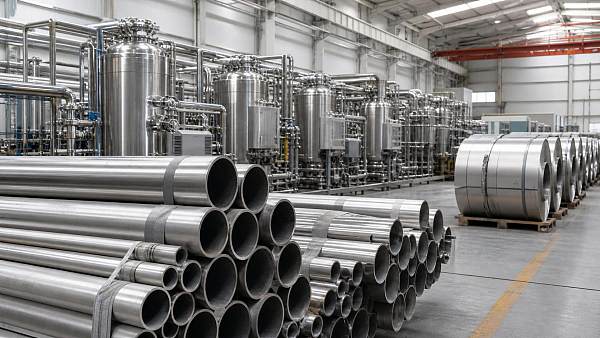
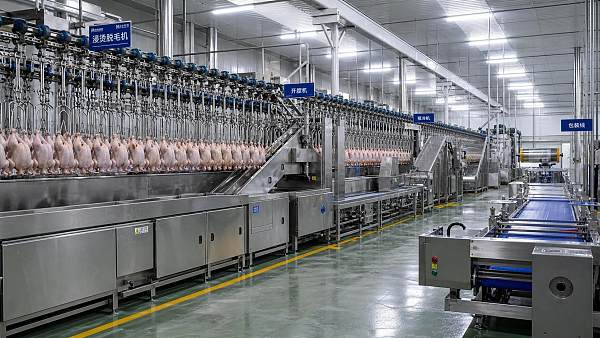
On July 10, 2026, the latest movement in 316L stainless steel pricing drew attention beyond raw materials markets because it coincided with a trade-rule development: the European Commission opened an anti-dumping investigation into Chinese food-grade stainless steel tubing under Case No. AD658, while Sandvik announced a 12% production cut for Q3. For manufacturers, exporters, procurement teams, and supply-chain operators involved in Slaughtering Lines, Bowl Cutters & Stuffers, and Continuous Lyo-Chambers, this matters less as a standalone price spike and more as a signal that trade scrutiny and supply tightening may start affecting equipment cost and delivery conditions at the same time.
What Has Been Confirmed So Far
LME data dated July 10, 2026 showed the spot price of 316L stainless steel at $4,280 per ton, the highest level since 2023. The event summary attributes the move to two confirmed factors: the European Commission’s launch of an anti-dumping investigation into Chinese food-grade stainless steel tubing under Case No. AD658, and Sandvik’s announcement of a 12% output reduction for Q3. The same material is identified as a required structural input for Slaughtering Lines, Bowl Cutters & Stuffers, and Continuous Lyo-Chambers, with the stated consequence that complete-machine export costs and lead times are expected to face upward pressure.
Where the Pressure Is Likely to Appear First
Trade-facing sellers may need closer file and pricing control
From an industry perspective, companies directly involved in cross-border sales of equipment or related components may be among the first to feel the effect. The reason is straightforward: when an anti-dumping investigation enters the picture, commercial offers tied to stainless inputs can become harder to hold steady. What deserves closer attention is whether product descriptions, material declarations, and export documentation remain aligned with buyer requirements as pricing and sourcing assumptions change.
Procurement teams are exposed through material cost and availability
For raw-material and component buyers, the issue is not only the higher 316L spot price but also the combination of trade scrutiny and reduced announced supply. In practical terms, procurement risk may show up in quotation validity, sourcing flexibility, and lead-time planning for equipment that depends on food-grade stainless structures. Observably, teams handling purchasing schedules should pay closer attention to supplier commitments, material specifications, and delivery windows rather than treating this as a short-term price fluctuation alone.
Equipment manufacturers may face pressure in delivery commitments
Manufacturers of Slaughtering Lines, Bowl Cutters & Stuffers, and Continuous Lyo-Chambers are connected to the event through direct material dependence. Analysis shows that any increase in 316L input costs can move quickly into machine pricing, while tighter availability can affect build schedules. The operational impact is most likely to emerge in contract pricing, production sequencing, and promised shipment dates, especially where stainless structural parts are not easily substituted.
Supply-chain service providers may need to monitor execution risk
Logistics coordinators, project-delivery teams, and after-sales support functions may also need to watch this development more closely. If upstream material timing shifts, the downstream effect may appear in project handover schedules, spare-parts readiness, and service planning. It is more appropriate to understand this as an execution-risk signal rather than a confirmed disruption, but it is still relevant for parties managing contractual delivery obligations.
What Companies Should Watch Now
Review material-linked commercial terms
Analysis shows that companies with open quotations, ongoing tenders, or export contracts involving 316L-intensive equipment should check whether current pricing assumptions remain workable. Where contract language depends heavily on raw-material stability, the immediate issue is less about rewriting terms and more about identifying where exposure already exists.
Check technical and compliance documentation consistency
Because the trigger includes an anti-dumping investigation involving food-grade stainless steel tubing, businesses should pay attention to the consistency of technical files, material descriptions, and any supporting product documentation used in trade or customer review. The event summary does not provide a final enforcement outcome, so this should be treated as a compliance-monitoring point rather than a confirmed new filing requirement.
Reassess lead-time assumptions for stainless-dependent equipment
For projects involving Slaughtering Lines, Bowl Cutters & Stuffers, and Continuous Lyo-Chambers, lead times deserve renewed review. Observably, if raw-material purchasing becomes slower or more expensive, delivery commitments may need tighter internal tracking. That does not confirm a uniform delay across the market, but it does justify closer control over procurement milestones and production scheduling.
Track follow-up language from market and rule-making channels
What deserves closer attention is not only the initial announcement but also how the language around the case and related market responses develops. Companies should continue monitoring official statements, buyer-side specification changes, tender documentation updates, and supplier communications before treating this event as a settled trade condition.
Why This Looks More Like a Signal Than a Final Outcome
Observably, the current development sits at the intersection of a trade investigation and a supply-side reduction, which is why the market reaction matters to equipment-related industries. At this stage, however, the information provided supports a cautious reading: the event is a meaningful signal that pricing, procurement, and delivery risk may be tightening, but it does not by itself establish a completed policy outcome or a fully defined enforcement framework. From an industry perspective, the key value of this update is that it highlights where companies may need to prepare for changes before formal market practice settles.
How This Update Is Best Understood Today
For the industry, the main significance of this event is not simply that 316L stainless steel became more expensive on July 10, 2026. It is that a trade-rule development and a supply cut appeared together around a material that is essential to several categories of food-processing and related equipment. Analysis shows that this is better understood as a developing execution and cost signal, with practical implications for procurement, export pricing, and delivery planning, rather than as a final and fully defined regulatory outcome.
Basis of This Article and What Still Needs Verification
This article is based on the user-provided news title, event date, and event summary. For events of this type, commonly relevant source categories may include official announcements, releases from regulatory authorities, customs or trade-administration information, industry association updates, standards body documents, and reporting by established business or industry media. No specific official source link was provided in the input, so the underlying official documentation and any subsequent formal updates still require ongoing verification. Observably, the points that remain worth tracking include later policy detail, enforcement language, certification or compliance interpretation, tender-document changes, industry feedback, and how companies implement adjustments in procurement and delivery practice.
Related News
 316L Stainless Steel Jumps 18% as EU Probe Begins316L stainless steel jumps 18% as the EU probe begins, raising cost and lead-time risks for exporters, buyers, and equipment makers. See what AD658 and tighter supply could mean now.
 Industrial Slaughtering Equipment for Poultry: Line Configuration and Throughput PlanningIndustrial slaughtering equipment for poultry: learn how line configuration, hygiene-focused design, and realistic throughput planning improve yield, reduce bottlenecks, and support scalable plant performance.
 China Customs Opens Green Lane for GCC Slaughtering Line ExportsChina Customs Opens Green Lane for GCC Slaughtering Line Exports, cutting inspection to 3 days and speeding 3A/GSO checks. See how qualified exporters and GCC buyers can improve delivery certainty.
![]() What Drives Slaughtering Lines Cost? Equipment Scope, Capacity, Labor, and Utilities ExplainedSlaughtering lines cost depends on equipment scope, capacity, labor, utilities, and hygiene design. Discover the real cost drivers and compare suppliers with confidence.
What Drives Slaughtering Lines Cost? Equipment Scope, Capacity, Labor, and Utilities ExplainedSlaughtering lines cost depends on equipment scope, capacity, labor, utilities, and hygiene design. Discover the real cost drivers and compare suppliers with confidence.![]() China Opens GCC Fast-Track for 3A Slaughtering Line ExportsChina opens a GCC fast-track for 3A slaughtering line exports, cutting customs clearance to 48 hours for Saudi Arabia, the UAE, and Qatar. See key compliance and document requirements.
China Opens GCC Fast-Track for 3A Slaughtering Line ExportsChina opens a GCC fast-track for 3A slaughtering line exports, cutting customs clearance to 48 hours for Saudi Arabia, the UAE, and Qatar. See key compliance and document requirements. Microbiological Control in Meat Plants: Critical Points for Listeria and Salmonella PreventionMicrobiological control in meat plants starts with smart zoning, hygienic design, and targeted monitoring. Learn critical points to prevent Listeria and Salmonella while protecting throughput.
 China Customs Opens Fast Track for 3A Slaughtering Line ExportsChina Customs fast-tracks 3A slaughtering line exports with 48-hour clearance. Learn how GSO 3A Sanitary certification and Saudi SASO 2026 rules affect GCC delivery, compliance, and supplier selection.
 China Customs Starts AI Pre-Clearance for Slaughtering LinesChina Customs starts AI pre-clearance for slaughtering lines, requiring 72-hour document uploads before shipment. Learn how exporters and buyers can cut port dwell time by 68 hours.
 China Customs Launches AI Pre-Clearance for Slaughtering LinesChina Customs AI pre-clearance for slaughtering lines is reshaping HS 8438.80 exports. Learn how EHEDG files, CIP/SIP schematics, and 3A certificates affect 48-hour clearance.
 Meat Processing Line Design: Key Equipment, Hygiene Risks, and Throughput PlanningMeat processing line design explained: compare key equipment, hygiene risks, and throughput planning to build safer, cleaner, higher-output operations.
 China Customs Opens Fast Track for 3A Slaughtering EquipmentChina Customs opens a fast track for 3A slaughtering equipment, cutting export inspection to 3 working days and boosting clearance efficiency. See what it means for exporters and buyers.
 Saudi SFDA Sets 3A Rule for Meat Lines by Jan 2027Saudi SFDA sets a 3A rule for meat lines by Jan 2027, with audits from Oct 2026 and port detention risks. See what exporters, buyers, and processors must do now.