Vietnam MFDA Tightens Microbial Challenge Testing for MAP Equipment
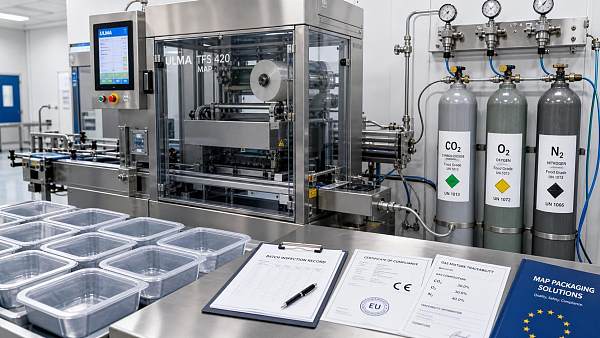
Vietnam’s Ministry of Health–affiliated Medical Food and Drug Administration (MFDA) issued an urgent notice on May 28, 2026, significantly strengthening microbial challenge testing requirements for imported Modified Atmosphere Packaging (MAP) equipment—impacting manufacturers, exporters, and supply chain stakeholders across the food packaging machinery sector.
Key Regulatory Update: Enhanced Microbial Validation Mandate
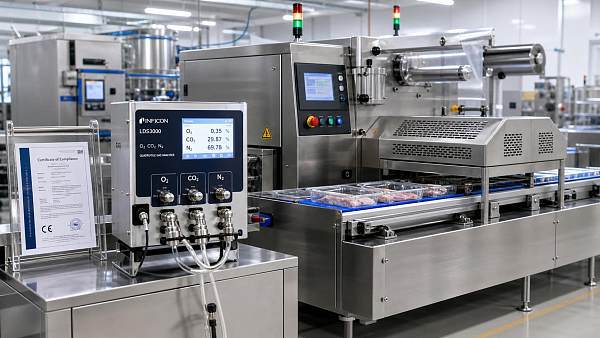
On May 28, 2026, the MFDA released an emergency directive requiring all newly registered and pending-registration imported MAP equipment to pass a reinforced microbial challenge test. The test must be conducted under simulated worst-case operating conditions and target critical components—including the chamber, gas mixing valve, and sealing head—with a dynamic contamination challenge of Staphylococcus aureus at ≥106 CFU/mL. Post-test residual microbial load must not exceed 10 CFU per unit. The regulation entered into force immediately upon issuance.
Supply Chain Impact Across Stakeholder Roles
Exporters and Direct Trading Enterprises
These entities face immediate implications for market access: new MAP equipment shipments to Vietnam now require updated type-test reports demonstrating compliance with the revised microbial threshold. Pre-clearance verification delays and potential retesting may disrupt shipment schedules and increase customs clearance risk.
Component and Subsystem Suppliers
Suppliers of gas valves, sealing mechanisms, and chamber liners must ensure their parts contribute to full-system compliance—not just individual performance. This triggers tighter technical documentation requirements and may necessitate joint validation efforts with OEMs.
Equipment Manufacturers and Assemblers
Manufacturers must adapt design validation protocols to incorporate dynamic bacterial challenge testing under worst-case operational parameters. Internal R&D and QA workflows now need alignment with MFDA’s specific test methodology, including strain selection, inoculation method, and recovery assessment.
Compliance and Certification Service Providers
Third-party testing laboratories and certification bodies must update their scope of accreditation to cover the new MFDA-mandated test protocol. Capacity constraints and extended turnaround times for MAP equipment certification are anticipated in the near term.
Actionable Priorities for Exporting Enterprises
Reassess Type-Test Documentation Against MFDA’s New Threshold
Verify whether existing microbial challenge reports meet the ≥106 CFU/mL inoculum level and ≤10 CFU/unit residual limit. Reports based on static or lower-dose challenges no longer satisfy the requirement.
Confirm Test Conditions Align With Worst-Case Operating Parameters
Ensure test protocols explicitly simulate worst-case service conditions—including temperature extremes, pressure fluctuations, and cycle frequency—as defined by MFDA. Generic or nominal-condition testing is insufficient.
Engage Early with Accredited Labs for Protocol Alignment
Initiate coordination with MFDA-recognized testing facilities to co-develop or validate test plans before submitting applications—particularly for devices currently under review.
Update Technical Specifications and Tender Responses
Revise product datasheets, technical bids, and regulatory dossiers to reflect compliance with the May 2026 MFDA directive, including explicit reference to the S. aureus challenge level and residual count metric.
Industry Observation: Rising Technical Barriers and Validation Complexity
Analysis shows this amendment signals a broader shift toward outcome-based, biologically validated safety assurance—not just engineering specifications—for food packaging equipment in regulated ASEAN markets. From an industry perspective, the abrupt enforcement timeline and lack of transitional provisions indicate heightened vigilance around post-packaging microbial control. What deserves closer attention is how this may accelerate harmonization efforts with EU MDR-aligned standards for medical-grade packaging systems—and whether similar microbial challenge thresholds will emerge for vacuum packaging or active packaging equipment in Vietnam’s next regulatory cycle.
Strategic Takeaway: Compliance Is Now a Dynamic, System-Level Requirement
This update underscores that regulatory acceptance for MAP equipment in Vietnam has evolved from component-level conformity to integrated, real-world biological performance validation. Success hinges not only on meeting static design criteria but also on demonstrably controlling microbiological risk under stress conditions—making pre-emptive validation planning and cross-functional technical alignment essential for sustained market access.
Source Attribution and Monitoring Guidance
This article was generated exclusively from the provided title, event date (May 28, 2026), and event summary. Specific official source links were not provided in the input and should be verified continuously. Stakeholders are advised to monitor forthcoming MFDA implementation guidelines, official interpretations of ‘worst-case operating conditions’, updates to recognized testing laboratories, and any revisions to Vietnamese national standards (e.g., TCVN) referencing MAP equipment validation protocols.
Related News
 How Freeze Drying Technology for Coffee Preserves Aroma and Improves Shelf LifeDiscover how freeze drying technology for coffee preserves aroma, improves shelf life, and supports premium quality with smart processing and packaging insights.
 FDA Sets CIP/SIP Flow Validation Rule for 2026FDA Sets CIP/SIP Flow Validation Rule for 2026: learn how the new FDA update impacts food equipment exports, EHEDG 42:2025 compliance, supplier audits, and U.S. market readiness.
 How to Choose Stainless Steel Deboning Equipment for Throughput, Hygiene, and YieldStainless steel deboning equipment buying guide: learn how to balance throughput, hygiene, and yield to cut downtime, protect food safety, and improve processing profits.
 EU Tightens MAP Gas Certification From October 2026EU Tightens MAP Gas Certification From October 2026: learn how EN 14185-2:2026, traceable batch data, and stability reports will impact MAP suppliers, importers, and market access.
 Vacuum Freeze Drying for Probiotics: Process Basics, Benefits, and Key LimitsVacuum freeze drying for probiotics explained: learn process basics, key benefits, major limits, and how to evaluate viability, cost, packaging, and scale-up before choosing this method.
 FDA Expands 3A Mutual Recognition for Food Machinery SealsFDA expands 3A mutual recognition for food machinery seals, reshaping U.S. compliance for sanitary equipment. Learn the impact on exporters, buyers, and certification workflows.
 How to Evaluate a Bottle Filling Equipment Manufacturer for Accuracy, Hygiene, and ThroughputBottle filling equipment manufacturer selection starts with proven accuracy, hygienic design, and sustainable throughput. Learn what to verify before you buy with this practical guide.
 EU Rule Sets MAP Sensor Requirement for ImportsEU Rule Sets MAP Sensor Requirement for Imports: learn how the new EU MAP equipment rule impacts CE compliance, validation data, delivery timelines, and supplier readiness before August 1, 2026.
 Commercial Food Processing Hygiene Checklist for Audits, Zoning and Allergen ControlCommercial food processing hygiene checklist for audits, zoning, and allergen control. Learn practical steps to improve compliance, reduce risk, and strengthen plant performance.
 High Efficiency Food Manufacturing: Where Throughput Gains Offset Equipment CostHigh efficiency food manufacturing turns equipment cost into margin through higher throughput, lower waste, better hygiene, and longer shelf life. See what drives faster ROI.
 Dough Processing Machinery for Pizza: What to Compare Before Choosing a LineDough processing machinery for pizza: compare dough handling, sanitation, throughput, flexibility, and operating cost before choosing a line that protects quality and boosts ROI.
 Energy Efficient Vacuum Drying: Key Parameters, Limits and Best-Fit MaterialsEnergy efficient vacuum drying explained: learn the key parameters, practical limits, and best-fit materials to improve product quality, sanitation, and operating efficiency.