Commercial Food Processing Costs Explained: Equipment, Utilities, Labor, and Compliance
Commercial food processing costs shape every capital decision in modern food plants, from equipment selection and utility loads to labor efficiency and compliance risk. For financial approvers, understanding how these cost drivers interact is essential to balancing throughput, food safety, and long-term ROI. This guide breaks down the real expense structure behind industrial processing lines, helping you evaluate investments with greater clarity and confidence.
What Financial Approvers Are Really Trying to Understand
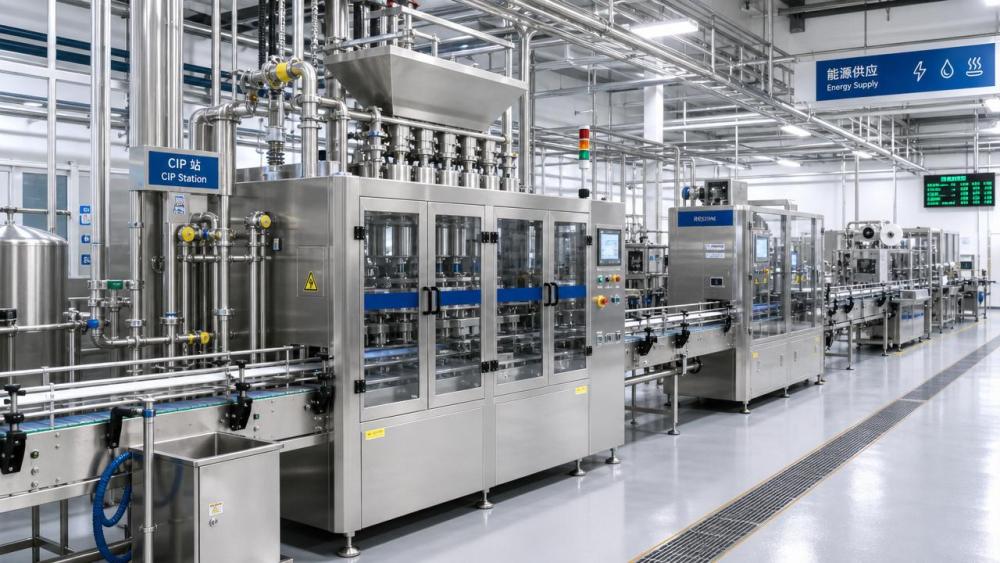
The core search intent behind commercial food processing cost analysis is not simple price comparison. Financial approvers want a reliable framework for judging total cost, operating exposure, and payback certainty.
They are usually asking practical questions. What will this line truly cost beyond the quote? Which expense categories grow fastest? Where do delays, hygiene failures, and utility inefficiencies destroy margins?
In most cases, the right answer is that equipment price is only one layer of the investment. Utilities, labor structure, maintenance, sanitation, validation, and regulatory compliance often decide actual profitability.
For plants handling meat, beverages, bakery products, dehydrated foods, or MAP-packed goods, cost control depends on matching process design with throughput goals, food safety obligations, and product shelf-life targets.
The Real Cost Structure of Commercial Food Processing
When executives review a new project, they often begin with capital expenditure. That is necessary, but commercial food processing economics are better understood as a full life-cycle cost model.
The main cost blocks usually include equipment acquisition, factory integration, utilities, direct labor, sanitation, maintenance, quality assurance, consumables, packaging interaction, and compliance management.
These categories do not act independently. A faster filler may reduce labor cost but increase compressed air demand. A hygienic slicer may cost more upfront but sharply reduce contamination risk and washdown downtime.
For financial decision-making, the key is to evaluate each category against three business outcomes: output capacity, product loss reduction, and risk containment. Those outcomes matter more than headline machine price alone.
Equipment Costs: Why the Purchase Price Rarely Tells the Full Story
Equipment is the most visible expense in commercial food processing, but not always the largest over the asset life. Financial approvers should separate machine price from installed project cost.
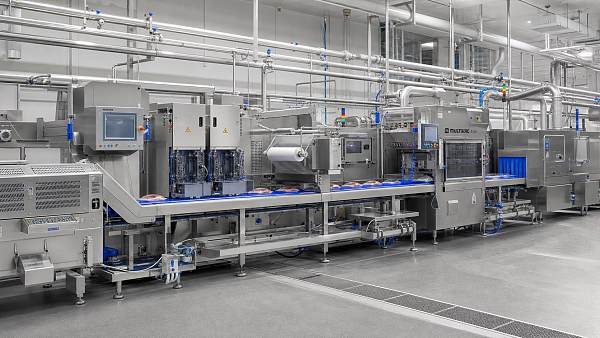
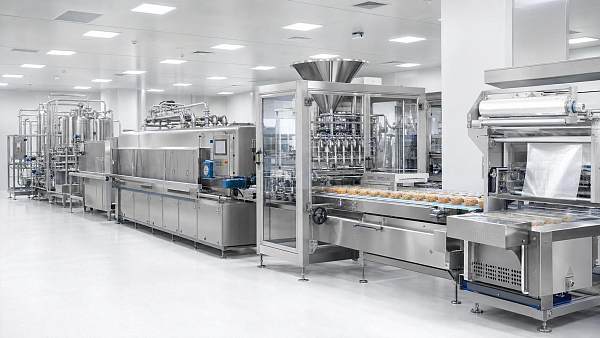
Installed cost includes line engineering, conveyors, controls, piping, utility connections, commissioning, test runs, training, and often factory modifications. In hygienic environments, drainage, zoning, and washdown readiness also matter.
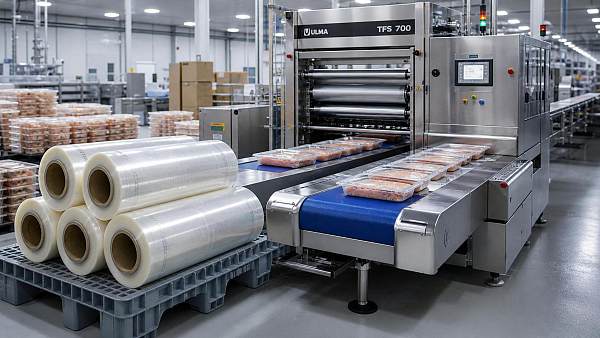
For example, a meat processing line may require all-stainless structural design, high-pressure washdown compatibility, and precise cutting modules. These add capital cost but support throughput consistency and sanitation performance.
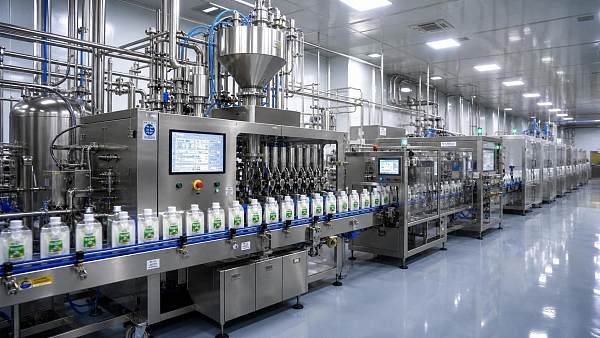
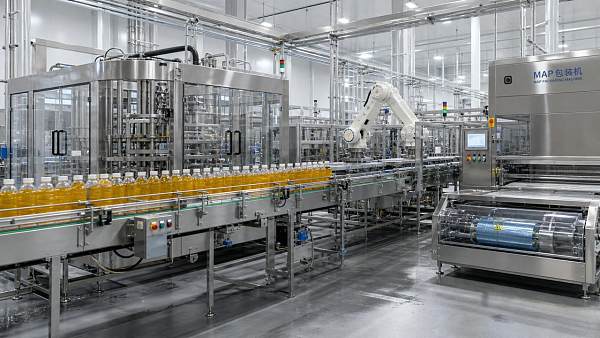
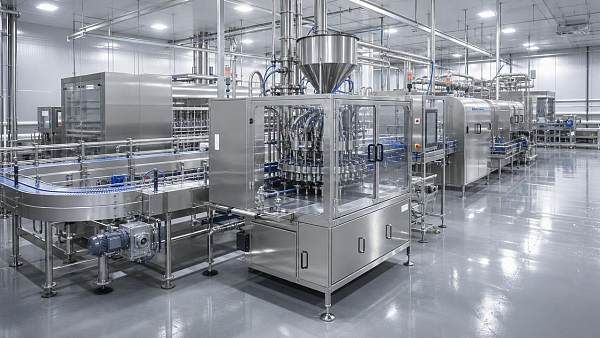
Beverage and aseptic filling lines carry even more integration intensity. Sterile chambers, CIP/SIP loops, clean utilities, and high-speed synchronization systems can significantly expand total project investment beyond the base machine.
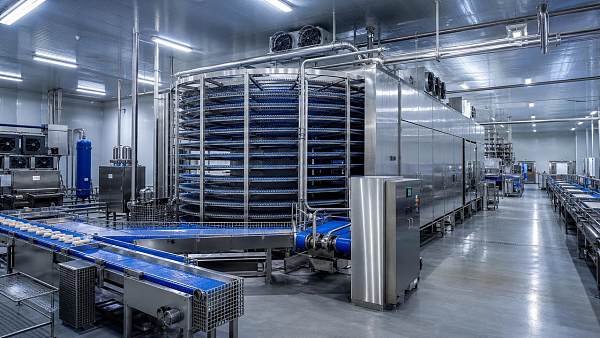
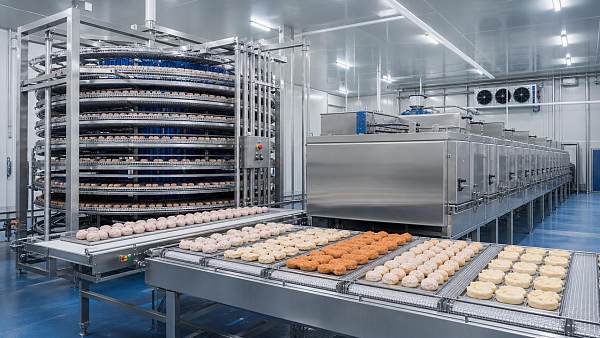
Bakery, dehydration, and freeze-drying systems often involve long thermal processes. Tunnel ovens, vacuum systems, condensers, insulation, and heat recovery arrangements can change both capex and future operating efficiency.
For this reason, finance teams should request a cost breakdown that distinguishes equipment value, integration scope, startup support, and expected upgrade needs over five to ten years.
Utilities Often Become the Biggest Cost Surprise
Utility consumption is one of the most underestimated commercial food processing costs. Electricity, steam, gas, compressed air, chilled water, refrigeration, and process water can reshape operating margins over time.
High-throughput systems may look efficient on a unit basis but still create large absolute demand peaks. If the plant lacks adequate infrastructure, utility upgrades can become hidden capital expenditure.
Meat processing operations face heavy washdown and cold-chain loads. That means water, hot water, chemical dosing, wastewater treatment, and refrigeration must all be included in the financial model.
Aseptic filling lines require sterile conditions, precise temperature management, and continuous cleaning capability. Even small inefficiencies in steam generation, heat exchange, or clean compressed air can produce recurring cost leakage.
Industrial baking lines consume substantial thermal energy. The financial question is not only burner capacity, but also zoning accuracy, conveyor loading balance, exhaust losses, and waste heat recovery potential.
Freeze-drying equipment can be especially energy intensive because vacuum pump performance, cold trap defrosting, and cycle duration directly affect cost per kilogram. Utility modeling is critical before capital approval.
Smart buyers ask suppliers for consumption data under real production conditions, not ideal lab assumptions. They also compare energy use per finished unit, not only per machine hour.
Labor Costs Depend on Line Design More Than Headcount Alone
Labor cost in commercial food processing is often discussed too narrowly. Financial approvers should not look only at operator numbers, but at the entire labor structure required to sustain output safely.
That structure includes operators, sanitation crews, maintenance technicians, quality inspectors, supervisors, warehouse support, and occasionally specialized compliance or validation staff for regulated environments.
Automation can reduce repetitive manual tasks, but its value is highest when it also improves yield, reduces handling damage, and stabilizes hygiene. Fewer workers alone do not guarantee stronger economics.
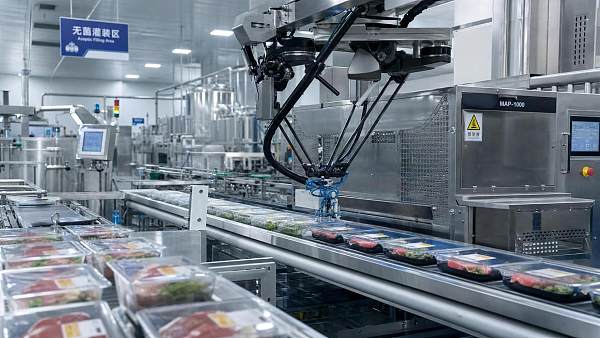
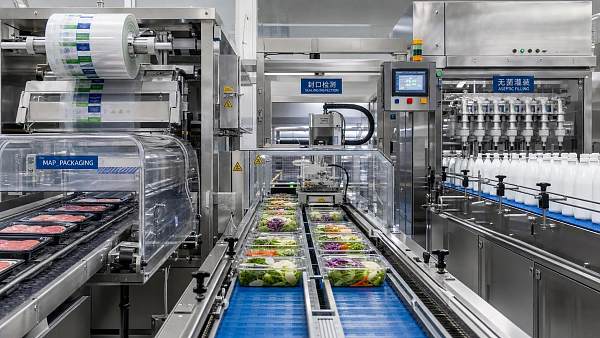
In MAP packaging, for instance, automation can cut manual contact, reduce contamination pathways, and improve seal consistency. That can lower spoilage and shrinkage while supporting labor efficiency at the same time.
For finance teams, the better question is this: how many labor hours are required per saleable ton, bottle, tray, or batch under normal and peak conditions? That metric is more decision-useful than raw staffing totals.
It is also important to examine labor sensitivity. If a line is highly dependent on skilled manual adjustment, absenteeism and turnover can become hidden operating risks that affect output reliability.
Compliance Is Not a Side Cost. It Is a Core Financial Variable
Food safety compliance is sometimes treated as an unavoidable overhead, but in reality it is a major driver of commercial food processing economics and investment quality.
Compliance costs include hygienic design requirements, documentation, validation, audits, microbiological controls, traceability systems, certifications, and the operational discipline needed to maintain them consistently.
In export-oriented or multinational supply chains, standards may include EHEDG principles, 3-A expectations, HACCP structures, customer audit protocols, and local sanitary regulations. Each requirement can affect equipment selection.
For example, polished surfaces, dead-leg reduction, validated CIP flow performance, and easier-to-clean machine geometry may raise acquisition cost. However, they can reduce contamination events and shorten sanitation windows.
For a CFO or capital committee, the most relevant issue is risk-adjusted cost. A cheaper machine that complicates audit readiness or creates recurring food safety exposure may be the more expensive decision overall.
Compliance failures also carry asymmetric downside. Product recalls, rejected export lots, production holds, and reputational damage can erase years of apparent savings from low-cost equipment choices.
How to Evaluate Total Cost of Ownership Instead of Just Capex
The strongest financial decisions in commercial food processing come from total cost of ownership analysis. This means comparing options across their full economic life, not just purchase budgets.
A useful TCO model should include initial capex, installation, utilities, labor demand, sanitation time, maintenance parts, downtime risk, expected yield, shelf-life impact, and compliance support costs.
It should also include scenario analysis. What happens if throughput rises? What if utility rates increase? What if sanitation labor becomes more expensive or microbiological standards tighten?
Payback calculations should be based on real business gains, such as reduced giveaway, improved line uptime, lower spoilage, longer shelf life, or increased saleable output from the same footprint.
For example, an automated MAP line may justify itself not only through labor reduction, but through lower leakage, longer retail freshness, and less cold-chain shrinkage across distribution channels.
Likewise, a faster aseptic filling system may create value by supporting SKU growth and reducing contamination risk during high-volume production windows. Strategic flexibility can be financially meaningful.
Questions Financial Approvers Should Ask Before Signing Off
To make a sound approval decision, finance leaders should ask a focused set of operational and economic questions rather than relying on generic ROI claims from vendors.
First, what is the installed cost and what assumptions are excluded? Missing items often include utility upgrades, drainage changes, environmental controls, or integration with existing upstream and downstream systems.
Second, what is the proven utility consumption at target throughput and sanitation frequency? Data should reflect real product conditions, not empty-line demonstrations or selective benchmark scenarios.
Third, what labor model is required across operation, cleaning, quality control, and maintenance? A line that appears automated may still demand high support labor in practice.
Fourth, what compliance burden does the system reduce or create? Finance teams should understand whether hygienic design and traceability features lower audit stress and contamination exposure.
Fifth, what is the financial impact of downtime, yield loss, and shelf-life instability? In many plants, these variables matter more than moderate differences in capital purchase price.
Where the Best Investments Usually Win
The best commercial food processing investments tend to win in a few consistent ways. They reduce cost per unit, improve saleable yield, shorten sanitation time, and lower the probability of compliance disruption.
They also fit the plant’s real production profile. Oversized systems can waste utilities and capital, while undersized lines create labor inefficiency, bottlenecks, and missed revenue opportunities.
For financial approvers, the highest-value projects are usually those that align throughput, hygienic design, and automation with a measurable business objective such as export readiness or shelf-life extension.
That is especially true in sectors like meat, beverages, industrial baking, and MAP packaging, where product safety and production speed are tightly linked to factory economics.
Conclusion: Cost Clarity Leads to Better Capital Decisions
Commercial food processing costs are best understood as an operating system, not a single invoice. Equipment, utilities, labor, and compliance continuously influence one another across the life of the asset.
For financial approvers, the smartest path is to evaluate total cost of ownership, risk-adjusted returns, and the line’s ability to protect both throughput and food safety under real plant conditions.
When a project is judged through that wider lens, capital decisions become clearer. You are not simply buying machines. You are funding capacity, resilience, sanitation confidence, and long-term margin performance.
Related News
 Commercial Food Packaging Cost Guide: Materials, Throughput, Labor, and Hidden ExpensesCommercial food packaging cost explained: compare materials, throughput, labor, sanitation, and hidden expenses to cut risk, improve ROI, and choose the right packaging system.
 What to Look for in Food Production Machinery for Snacks: Capacity, Changeover, WasteFood production machinery for snacks should be chosen by real output, fast changeovers, and waste control—not speed alone. Learn how to compare lines for lower cost and stronger margins.
 Food Manufacturing Automation Trends: Where Labor Savings Justify New InvestmentFood manufacturing automation trends are shifting toward investments driven by labor savings, hygiene control, and throughput gains. Discover where automation delivers the fastest ROI.
 Integrated Food Processing Systems: When a Turnkey Line Makes More SenseIntegrated food processing systems help food factories reduce interface risk, speed commissioning, improve hygiene, and boost ROI. See when a turnkey line is the smarter choice.
 How to Choose Integrated Food Processing Systems for Multi-Product Production LinesIntegrated food processing systems for multi-product lines: learn how to compare hygiene, changeover speed, control integration, and scalability to boost output and protect margins.
 Food Packaging Innovation Ideas That Improve Shelf Life Without Slowing Line SpeedFood packaging innovation ideas that extend shelf life without reducing line speed. Explore MAP, aseptic sealing, barrier materials, and automation strategies that cut waste and boost throughput.
 Food Machinery Price Guide: What Drives Equipment Cost and How to Compare QuotesFood machinery price explained: learn what drives equipment cost, compare supplier quotes correctly, spot hidden lifecycle expenses, and choose machinery that protects hygiene, output, and ROI.
 Spiral Freezers Price Explained: What Drives Cost in High-Throughput Frozen Food LinesSpiral freezers price explained for frozen food lines: learn how throughput, hygiene, layout, energy use, and maintenance shape real cost and smarter buying decisions.
 Food Processing Systems in Asia: Key Differences in Capacity, Automation, and ComplianceFood processing systems Asia are diverging fast in capacity, automation, and compliance. Discover what drives smarter plant investment and stronger competitiveness across regional markets.
 How to Evaluate Industrial Kitchen Equipment Suppliers for Food Factory ProjectsIndustrial kitchen equipment suppliers can make or break a food factory project. Learn how to compare hygiene, integration, cost, and service to choose with confidence.
 Spiral Freezers Price Guide: What Affects Cost, Capacity, and ROI?Spiral freezers price explained: discover what drives cost, capacity, hygiene, energy use, and ROI, so you can compare quotes smarter and choose the right system with confidence.
 Spiral Freezers vs Tunnel Freezers: Which Fits High-Volume Food Lines Better?Spiral freezers vs tunnel freezers: discover which system better supports high-volume food lines with stronger hygiene, smarter layout, lower operating costs, and more stable throughput.