FDA Updates Food Contact Cleaning Validation Guidance
Federal regulators in the United States have revised key validation requirements for equipment that contacts food or pharmaceutical products. The U.S. Food and Drug Administration (FDA) released an updated guidance document on May 22, 2026 — titled Food Contact Surfaces: Cleaning Validation Guidance — introducing new technical benchmarks for Clean-in-Place (CIP) and Steam-in-Place (SIP) systems. These changes directly affect manufacturers and exporters of aseptic processing equipment, particularly those supplying to U.S. food and biopharma facilities.
Event Overview
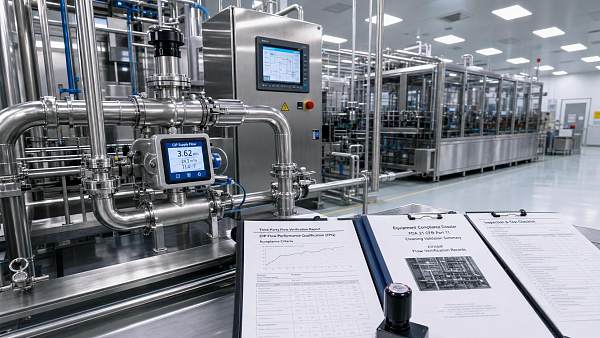
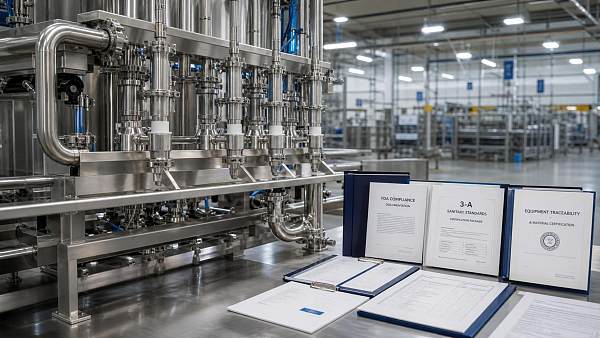
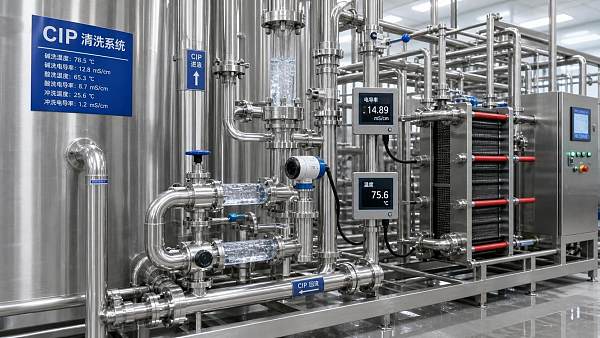
The FDA updated its Food Contact Surfaces: Cleaning Validation Guidance on May 22, 2026. For the first time, the guidance explicitly incorporates fluid dynamic parameters into the 3-A Sanitary Standards certification process: velocity profile mapping, turbulent flow criteria (Reynolds number > 4000), and temperature gradient monitoring across CIP return loops. These parameters are now mandatory elements of 3-A audit evaluations for equipment intended for food contact use.
Industries Affected
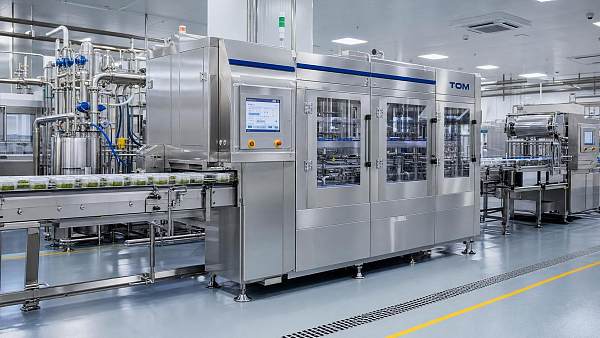
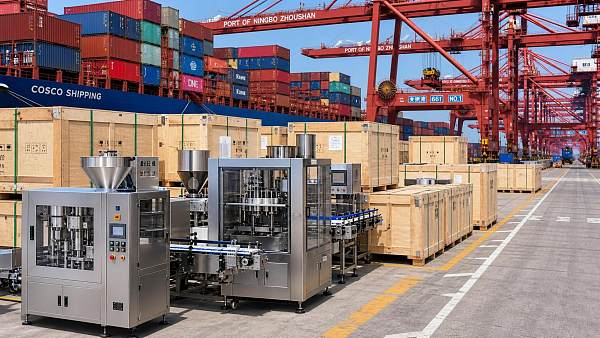
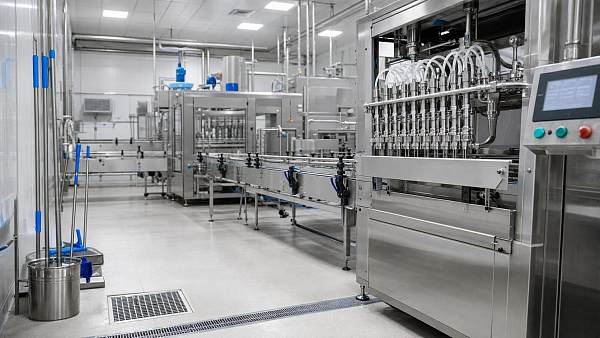
Direct Exporters: Companies exporting aseptic cold filling systems, isobaric filling valves, and continuous lyophilization chambers to the U.S. market will face longer pre-market validation timelines and higher third-party verification costs. Compliance now requires documented evidence of fluid behavior under operational conditions—not just static design conformity.
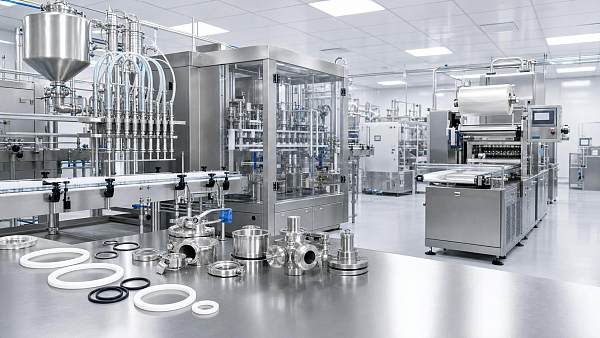
Raw Material Suppliers: Suppliers of sanitary-grade tubing, gaskets, and surface-finish alloys must align material certifications with newly emphasized thermal stability and flow-compatible surface roughness (Ra ≤ 0.8 µm). Unverified material data may trigger requalification requests from OEMs ahead of FDA-aligned audits.
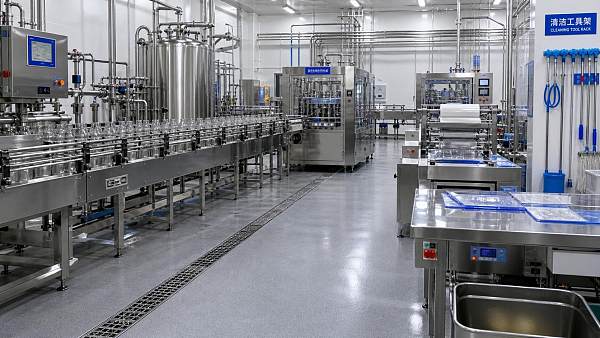
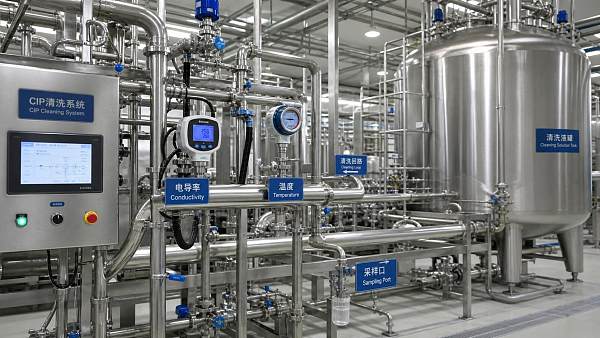
Equipment Manufacturers: Producers of CIP/SIP-integrated processing units must now integrate computational fluid dynamics (CFD) modeling into their design verification workflows—and embed real-time flow and temperature sensors in return lines. Retrofitting legacy platforms without such capabilities will incur significant engineering overhead.
Supply Chain Service Providers: Third-party validation labs, 3-A authorized auditors, and regulatory consultants will see increased demand for fluid-dynamics–capable testing services. However, current capacity for Re > 4000 turbulence validation and velocity-profile traceability remains limited—creating bottlenecks in lead times for U.S.-bound submissions.
Key Considerations and Recommended Actions
Integrate CFD Early in Design Cycles
Manufacturers should treat CFD simulation not as a final compliance check but as a foundational design tool—validating nozzle placement, loop geometry, and hold-time profiles before prototyping. This reduces late-stage redesign risk and supports FDA’s emphasis on science-based justification.
Upgrade Sensor Infrastructure for Real-Time Monitoring
CIP return-line temperature gradients and localized velocity measurements require calibrated, hygienically mounted sensors (e.g., ultrasonic Doppler or thermal anemometry). Firms should prioritize sensor compatibility with existing PLC/SCADA architectures and ensure data logging meets 21 CFR Part 11 traceability standards.
Engage 3-A Authorized Auditors During Pre-Submission Reviews
Given the novelty of fluid-dynamic criteria in 3-A evaluations, early alignment with auditors—especially on interpretation of Reynolds thresholds and acceptable uncertainty bands in velocity profiling—is critical to avoid rejection during formal assessment.
Editorial Perspective / Industry Observation
Observably, this update signals a structural shift: FDA is moving beyond “design qualification” toward “operational physics validation.” It reflects growing confidence in predictive fluid modeling and a broader regulatory trend—seen also in EU Annex 1 revisions—where cleaning efficacy is no longer assumed from geometry alone but demonstrated via quantifiable hydrodynamic behavior. Analysis shows this does not represent a sudden departure, but rather a formal codification of practices already emerging among leading U.S. contract manufacturers. From an industry standpoint, the greater challenge lies not in technical feasibility, but in harmonizing fragmented internal expertise—mechanical engineers, validation specialists, and software modelers must now collaborate earlier and more systematically.
Conclusion
This guidance revision underscores a maturing global standard for process equipment hygiene—one grounded less in prescriptive checklists and more in verifiable physical principles. While near-term costs and complexity will rise, the long-term effect may be stronger convergence between regulatory expectations, engineering practice, and digital twin-enabled validation. A rational interpretation is that this accelerates the transition from compliance-as-a-service to compliance-as-an-integrated-engineering-discipline.
Source Attribution
U.S. FDA, Food Contact Surfaces: Cleaning Validation Guidance, issued May 22, 2026. Available at: https://www.fda.gov/…/food-contact-surfaces-cleaning-validation-guidance. Note: Implementation timelines for enforcement discretion and acceptance of alternative methodologies remain under public consultation; stakeholders should monitor FDA’s Docket No. FDA-2026-N-1789 for updates.
Related News
 FDA Sets CIP/SIP Flow Validation Rule for 2026FDA Sets CIP/SIP Flow Validation Rule for 2026: learn how the new FDA update impacts food equipment exports, EHEDG 42:2025 compliance, supplier audits, and U.S. market readiness.
 FDA Expands 3A Mutual Recognition for Food Machinery SealsFDA expands 3A mutual recognition for food machinery seals, reshaping U.S. compliance for sanitary equipment. Learn the impact on exporters, buyers, and certification workflows.
 Commercial Food Processing Hygiene Checklist for Audits, Zoning and Allergen ControlCommercial food processing hygiene checklist for audits, zoning, and allergen control. Learn practical steps to improve compliance, reduce risk, and strengthen plant performance.
 Ningbo Port Rolls Out Export Compliance DashboardNingbo Port Rolls Out Export Compliance Dashboard, giving exporters and overseas buyers real-time visibility into certificates, pre-clearance records, and customs-linked shipment compliance.
 Meat Processing Sanitation Compliance: Key FDA, HACCP, and 3-A Requirements ExplainedMeat processing sanitation compliance explained: learn key FDA, HACCP, and 3-A requirements, spot audit risks, and improve cleanability, safety, and line performance.
 Food Safety Equipment Buying Guide: What Affects Cost, Compliance, and ROIFood safety equipment buying guide: learn what drives cost, compliance, and ROI. Compare sanitary design, certifications, utilities, and hidden operating costs before you invest.
 Commercial Food Processing Hygiene Checklist for HACCP, Cleaning, and Cross-Contamination ControlCommercial food processing hygiene checklist for HACCP, cleaning, and cross-contamination control. Learn practical steps to improve sanitation, audit readiness, shelf life, and line performance.
 Ningbo Launches Live Dashboard for FMCG Export ClearanceNingbo launches a live dashboard for FMCG export clearance, giving real-time visibility into certification, inspection, and release timing to speed compliant shipments and improve supply chain planning.
 How to Evaluate a Food Safety Equipment Manufacturer for FDA and 3-A ComplianceFood safety equipment manufacturer selection can make or break FDA and 3-A compliance. Learn what to verify in sanitary design, documentation, and process fit before you buy.
 Clean in Place Dairy Plants Explained: Process Steps, Validation Points, and Common FailuresClean in place dairy plants explained: learn the key CIP steps, critical validation points, and common failures that impact hygiene, uptime, and audit confidence.
 CIP System Validation vs Routine Verification: What Food Manufacturers Need to DocumentCIP system validation explained clearly: learn how it differs from routine verification, what food manufacturers must document, and how to avoid audit gaps, recalls, and costly compliance mistakes.
 Food Plant Sanitation Checklist: Critical Zones, Cleaning Frequency, and Audit ReadinessFood plant sanitation checklist for critical zones, cleaning frequency, and audit readiness. Learn practical steps to reduce contamination risks and improve daily compliance.