Hormuz Strait Fertilizer Transit Halt Forces MAP Shelf-Life Model Recalibration
On March 19, 2026, maritime transport of urea and ammonia through the Strait of Hormuz effectively halted due to navigational restrictions, triggering a >60% surge in global nitrogen fertilizer prices. This disruption directly impacts shelf-life stability of fresh meat, instant noodles, and baked goods under non-refrigerated conditions — prompting fast-moving consumer goods (FMCG) brands and MAP packaging suppliers to urgently reassess gas mixture ratios (N₂/O₂/CO₂) and oxygen transmission rate (OTR) specifications for barrier films. Stakeholders in food packaging, cold-chain-adjacent logistics, and export-oriented equipment manufacturing should treat this as a material operational signal.
Event Overview
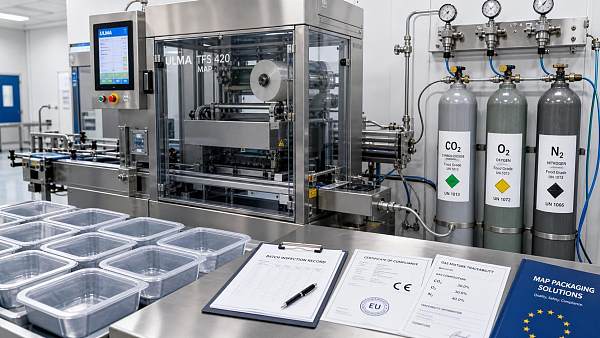
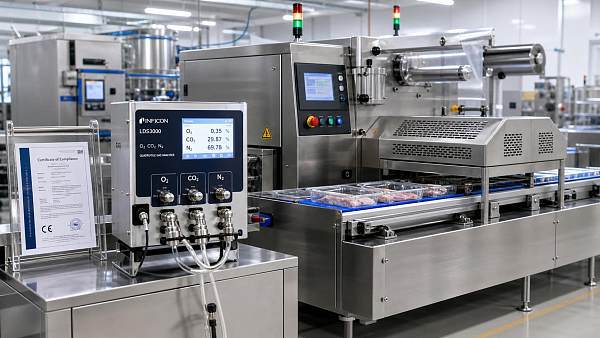
On March 19, 2026, shipping of urea and ammonia via the Strait of Hormuz declined to near-zero levels following imposed navigational restrictions. As a result, global nitrogen fertilizer prices rose by more than 60%. In response, FMCG companies began adjusting modified atmosphere packaging (MAP) gas compositions and barrier film oxygen transmission rate (OTR) parameters. Chinese MAP equipment exporters are now being asked to provide real-time shelf-life validation support services.
Industries Affected by Segment
Direct Trade Enterprises
Companies engaged in bulk import/export of nitrogen fertilizers — particularly those sourcing from or transiting through the Persian Gulf — face immediate cargo delays and contract renegotiation pressure. The halt directly constrains supply availability and introduces pricing volatility into long-term procurement agreements.
Raw Material Procurement Teams
Procurement units sourcing nitrogen-based preservatives, stabilizers, or feedstock for MAP gas generation (e.g., high-purity N₂ cylinders) are encountering extended lead times and cost inflation. Their input cost models — previously calibrated to stable regional fertilizer markets — no longer reflect current supply constraints.
Food Processing Manufacturers
Producers of ambient-stable perishables — including fresh-cut meat processors, instant noodle makers, and industrial bakeries — are observing accelerated quality degradation in non-refrigerated distribution channels. Shelf-life claims based on legacy MAP modeling now require empirical revalidation under current nitrogen supply volatility.
Supply Chain Service Providers
Firms offering MAP equipment, barrier film testing, or shelf-life prediction software must adapt technical support protocols. Demand is shifting from static model deployment toward dynamic, real-time validation workflows — especially from clients requiring documentation for regulatory compliance or retailer shelf-life assurance programs.
Key Focus Areas and Recommended Actions
Monitor official maritime advisories and fertilizer trade policy updates
Track statements from the International Maritime Organization (IMO), Gulf Cooperation Council (GCC) port authorities, and national customs agencies. Any easing or extension of transit restrictions will directly affect nitrogen availability timelines — and therefore MAP parameter recalibration windows.
Reassess shelf-life-critical SKUs with high ambient-distribution exposure
Prioritize validation efforts for products relying heavily on N₂-rich MAP blends and distributed without refrigeration — e.g., vacuum-sealed deli meats, pre-baked frozen doughs shipped ambient, or ambient-stable ready-to-eat meals. These categories show earliest signs of OTR-related quality drift.
Distinguish between short-term adjustment and structural recalibration
Treat current MAP parameter changes as provisional unless validated across ≥3 production batches and ≥2 geographic distribution routes. Avoid locking in new gas ratios or film specs before confirming consistency in real-world humidity, temperature, and handling variability.
Prepare cross-functional alignment between R&D, QA, and procurement teams
Initiate joint review sessions to align on updated shelf-life test protocols, revised OTR tolerance thresholds, and contingency plans for alternative gas suppliers. Document all assumptions used in interim recalibrations for audit readiness.
Editorial Perspective / Industry Observation
Observably, this event functions less as an isolated logistics incident and more as a stress test for MAP modeling frameworks that assume stable, globally distributed nitrogen inputs. Analysis shows that shelf-life prediction models — often trained on historical fertilizer price stability and consistent gas purity standards — are now exposed to upstream commodity volatility previously outside their scope. From an industry perspective, the need is not merely to adjust parameters, but to decouple MAP performance assumptions from single-source nitrogen supply dependencies. Current developments suggest the situation remains fluid: while price spikes are confirmed, duration and geographic spillover effects remain unconfirmed. Therefore, it is more accurate to interpret this as an early-warning signal for ambient-food supply chain resilience — not yet a settled operational reality.

Conclusion
This incident underscores how geopolitical disruptions in basic industrial inputs — such as nitrogen fertilizers — can propagate into downstream food safety, labeling compliance, and packaging engineering domains. It does not represent a fundamental failure of MAP technology, but rather reveals a gap in how shelf-life models account for macro-level supply chain fragility. Currently, it is more appropriate to understand this as a catalyst for methodological refinement in ambient-food shelf-life assurance — not a trigger for wholesale technology replacement or category abandonment.
Source Attribution
Main source: Verified incident report dated March 19, 2026, referencing Strait of Hormuz navigation restrictions and associated nitrogen fertilizer market impact. Ongoing monitoring is required for confirmation of sustained transit recovery, regional price normalization, and adoption timelines for revised MAP validation protocols.
Related News
 How Freeze Drying Technology for Coffee Preserves Aroma and Improves Shelf LifeDiscover how freeze drying technology for coffee preserves aroma, improves shelf life, and supports premium quality with smart processing and packaging insights.
 FDA Sets CIP/SIP Flow Validation Rule for 2026FDA Sets CIP/SIP Flow Validation Rule for 2026: learn how the new FDA update impacts food equipment exports, EHEDG 42:2025 compliance, supplier audits, and U.S. market readiness.
 How to Choose Stainless Steel Deboning Equipment for Throughput, Hygiene, and YieldStainless steel deboning equipment buying guide: learn how to balance throughput, hygiene, and yield to cut downtime, protect food safety, and improve processing profits.
 EU Tightens MAP Gas Certification From October 2026EU Tightens MAP Gas Certification From October 2026: learn how EN 14185-2:2026, traceable batch data, and stability reports will impact MAP suppliers, importers, and market access.
 Vacuum Freeze Drying for Probiotics: Process Basics, Benefits, and Key LimitsVacuum freeze drying for probiotics explained: learn process basics, key benefits, major limits, and how to evaluate viability, cost, packaging, and scale-up before choosing this method.
 FDA Expands 3A Mutual Recognition for Food Machinery SealsFDA expands 3A mutual recognition for food machinery seals, reshaping U.S. compliance for sanitary equipment. Learn the impact on exporters, buyers, and certification workflows.
 How to Evaluate a Bottle Filling Equipment Manufacturer for Accuracy, Hygiene, and ThroughputBottle filling equipment manufacturer selection starts with proven accuracy, hygienic design, and sustainable throughput. Learn what to verify before you buy with this practical guide.
 EU Rule Sets MAP Sensor Requirement for ImportsEU Rule Sets MAP Sensor Requirement for Imports: learn how the new EU MAP equipment rule impacts CE compliance, validation data, delivery timelines, and supplier readiness before August 1, 2026.
 Commercial Food Processing Hygiene Checklist for Audits, Zoning and Allergen ControlCommercial food processing hygiene checklist for audits, zoning, and allergen control. Learn practical steps to improve compliance, reduce risk, and strengthen plant performance.
 High Efficiency Food Manufacturing: Where Throughput Gains Offset Equipment CostHigh efficiency food manufacturing turns equipment cost into margin through higher throughput, lower waste, better hygiene, and longer shelf life. See what drives faster ROI.
 Dough Processing Machinery for Pizza: What to Compare Before Choosing a LineDough processing machinery for pizza: compare dough handling, sanitation, throughput, flexibility, and operating cost before choosing a line that protects quality and boosts ROI.
 Energy Efficient Vacuum Drying: Key Parameters, Limits and Best-Fit MaterialsEnergy efficient vacuum drying explained: learn the key parameters, practical limits, and best-fit materials to improve product quality, sanitation, and operating efficiency.