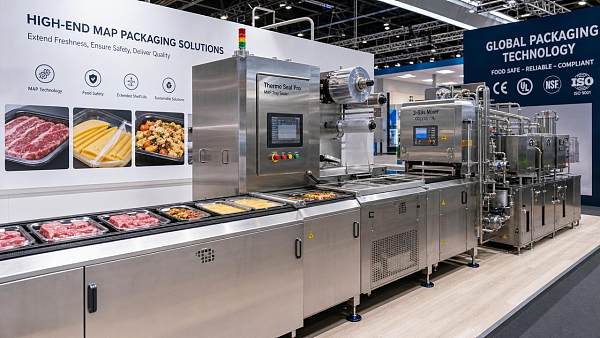
Thailand Tightens MAP Food Microbial Rules
The timing of the announcement is not specified in the provided information, but the policy direction is clear: Thailand has issued a new standard for thermally processed food in sealed containers that will take effect in June 2026, and it newly clarifies microbial requirements for MAP-packed ready-to-eat meat, salads, and prepared meal boxes. For food processors, packaging line integrators, exporters, and equipment suppliers, this is worth close attention because it links packaging performance more directly to validation, pathogen limits, and traceability expectations.
What the new Thai standard explicitly requires
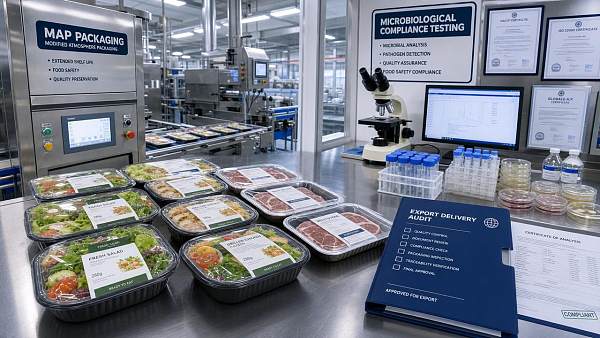
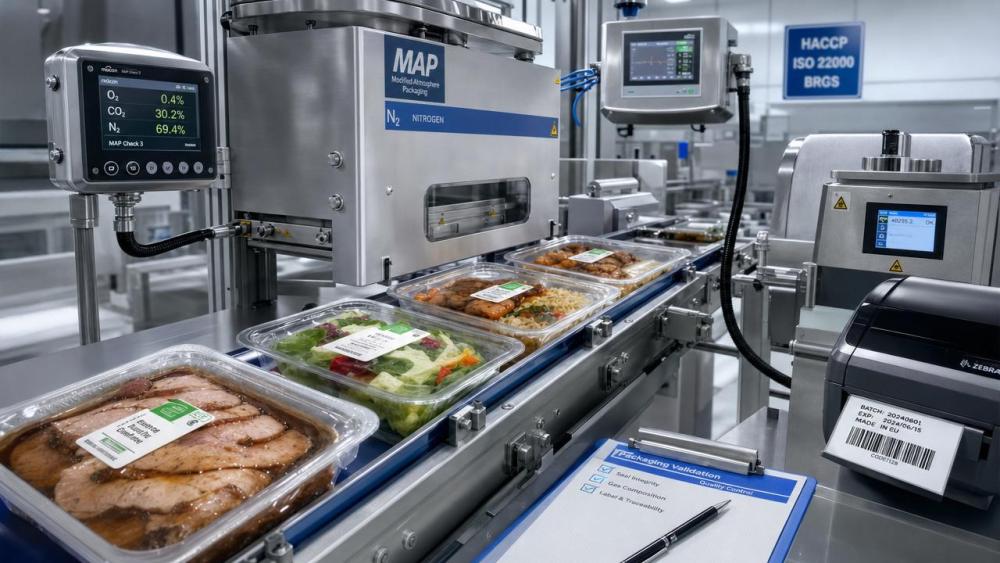
According to the provided summary, Thailand’s newly issued standard on thermal processing and microbial requirements for food in sealed containers will become effective in June 2026. The rule newly states that ready-to-eat meat products, salads, and prepared meal boxes using MAP must complete D-value validation and meet a pathogen limit of no more than 1 CFU/g.
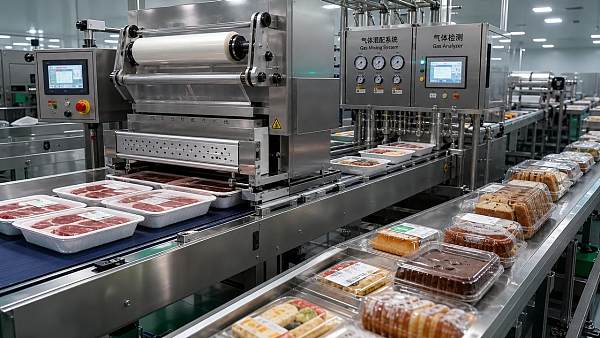
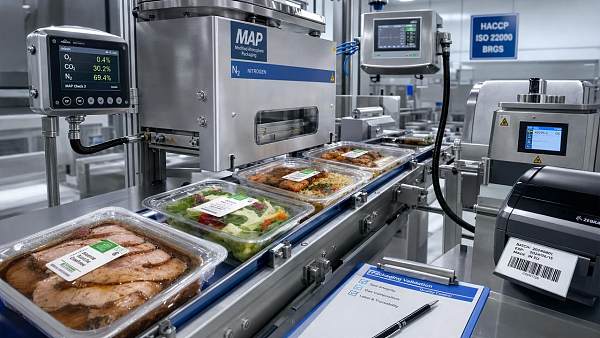
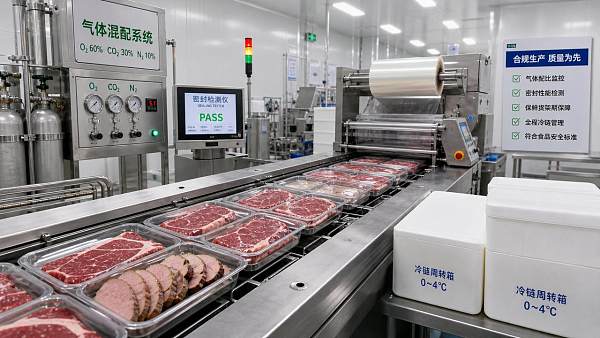
The same summary indicates that these requirements push MAP packaging lines toward integration of online gas analysis, closed-loop sterile nitrogen filling control, and batch-level microbial traceability functions. It also states that Chinese MAP equipment manufacturers serving export markets face a design upgrade requirement tied to both FDA and Thai FDA compliance.
Where the pressure is likely to appear first
Processing and packing operations face tighter line-level control
From an industry perspective, processors handling ready-to-eat meat, salads, and prepared meal boxes may be the first group to feel the operational impact. The reason is straightforward: the new requirement does not stop at final packaging form, but connects MAP use with validation and microbial thresholds. The business impact is therefore likely to concentrate on process verification, gas control during filling, and the ability to match each batch to microbial records.
Equipment exporters need to reassess compliance assumptions
Analysis shows that equipment suppliers, especially Chinese manufacturers exporting MAP systems, may need to review whether current machine designs are sufficient for both Thai FDA and FDA-related compliance expectations referenced in the provided summary. The main pressure point is not only hardware capability, but also whether the line can support documented control, measurement, and traceability in a way customers can use for regulatory response.
Supply-chain service providers may see documentation demands rise
For service providers involved in delivery, installation, validation support, or after-sales service, the likely impact is a shift toward more detailed technical documentation and longer pre-delivery communication. What deserves closer attention is whether customers begin asking earlier for proof of gas monitoring capability, sterile nitrogen control logic, or batch-level data retention support before purchase or acceptance.
What companies should watch before 2026
Watch the difference between headline requirements and line implementation
What deserves closer attention is the gap between the rule’s stated thresholds and the practical conditions needed to meet them on a running line. Companies should focus on how D-value validation, pathogen limits, and MAP control will be translated into equipment specifications, acceptance criteria, and customer documentation.
Review whether existing MAP lines can support closed-loop control
For manufacturers and buyers, a practical issue is whether installed or planned MAP lines can already support online gas analysis and sterile nitrogen filling in a closed-loop structure, or whether retrofits may be needed. This is especially relevant where export-oriented customers may ask suppliers to demonstrate not only packaging capability but also controllability and data capture.
Prepare batch-level traceability materials earlier
Observably, microbial traceability is becoming part of the packaging discussion rather than a separate quality topic. Companies involved in supply, integration, or export may need to prepare batch-linked records, technical files, and customer-facing compliance materials earlier in the sales and delivery cycle.
Track dual-compliance communication with customers
The provided information highlights a dual-compliance upgrade need involving FDA and Thai FDA expectations. For firms selling into export supply chains, the immediate task is less about making broad claims and more about confirming how product design, validation support, and delivery documents align with customer compliance checks.
Why this looks like a longer-term operational signal
Analysis shows that this development is better understood as more than a short-term rule update. The reason is that the stated requirements connect microbiological limits with specific packaging-line capabilities, which suggests a deeper integration of regulatory compliance and equipment design. That does not by itself prove how fast every buyer will move, but it does indicate that line architecture, control logic, and traceability features are becoming harder to treat as optional in relevant MAP applications.
It is more appropriate to understand this as a long-term signal with near-term preparation value. The effective date in June 2026 leaves time for response, but the adjustment burden may fall unevenly across processors, integrators, and exporters depending on how much validation and traceability support they already have in place.
How the market is likely to read this now
At this stage, the most balanced reading is that Thailand’s new rule sharpens compliance expectations for MAP use in selected ready-to-eat categories and raises the technical threshold for packaging systems serving those products. It does not by itself confirm immediate market-wide disruption, but it does give companies a concrete reason to review validation, gas control, and traceability readiness before the 2026 effective date.
From an industry perspective, the key significance lies in how microbial requirements are now being tied more explicitly to packaging execution. That makes this development worth following as both a regulatory change and a signal for equipment and process upgrades.
Basis of this article and points for continued verification
This article is generated from the user-provided news title, event timing information, and event summary. The specific official source link was not provided in the input, so further verification is still needed against source types commonly associated with this kind of update, such as official notices, company statements, industry association releases, authoritative media coverage, and standard-related documents.
Areas that still merit continued tracking include whether later official wording adds implementation detail, how the requirements are interpreted in actual procurement and export practice, and whether supporting compliance expectations for MAP equipment are clarified further in subsequent documents or market communication.
Related News
 Modified Atmosphere Packaging for Seafood: Gas Mixes, Shelf Life, and Product FitModified atmosphere packaging for seafood explained: compare gas mixes, shelf life limits, and best product fit to improve freshness, safety, and distribution performance.
 China MAP Equipment Export Prices Rise 11.3% in Q1China MAP Equipment Export Prices rise 11.3% in Q1 as compliance and polishing costs increase. Explore what this means for buyers, importers, and suppliers now.
 JETRO: China MAP Export Prices to Japan Rise 11.3%JETRO reports China MAP export prices to Japan rose 11.3% in April 2026. Learn what higher certification costs, currency swings, and leasing trends mean for food machinery buyers.
 Thailand Tightens MAP Microbiological Rules From June 15Thailand Tightens MAP Microbiological Rules From June 15: learn how TFDA’s new MAP compliance, EN 13724:2021 testing, and certification demands impact food exporters, importers, and customs readiness.
 How to Compare a Modified Atmosphere Packaging Supplier for Shelf Life and Line FitModified atmosphere packaging supplier comparison starts with shelf life, seal integrity, and real line fit. Learn how to assess MAP performance, hygiene, and uptime before you buy.
 Thailand Tightens MAP Food Microbial RulesThailand Tightens MAP Food Microbial Rules: learn how Thailand’s 2026 standard impacts MAP-packed ready-to-eat foods, pathogen limits, validation, traceability, and export compliance.
 MAP Packaging Orders Surge as Summer Shelf-Life Pressure BuildsMAP packaging orders surge as summer shelf-life pressure builds. Explore the 41.2% export jump, 14-week lead times, and what it means for fresh food packaging buyers and suppliers.
 Modified Atmosphere Packaging for Meat: Gas Mix Selection, Shelf Life, and ComplianceModified atmosphere packaging for meat: learn how to choose gas mixes, extend shelf life, and meet compliance requirements with practical insights for safer, more efficient meat packaging.
 EU Label Rule Spurs MAP Packaging OrdersMAP packaging demand is rising as the EU label rule approaches. Discover how EU 2026/1187 is driving packaging equipment orders, longer lead times, and urgent procurement planning.
 Warsaw Food Expo Spotlights MAP-Delta Traceability PushWarsaw Food Expo highlights a MAP-Delta traceability solution aligned with EU 2023/2724, showing how packaging, labeling, and palletizing can boost food compliance and buyer confidence.
 Shanghai Packaging Show Opens With MAP in FocusShanghai Packaging Show spotlights MAP systems as European and US buyers target compliant, high-precision food packaging lines. Explore key trends, standards, and sourcing signals.
![]() Automated Food Packaging for Fresh Meat: MAP vs Vacuum vs VFFS ExplainedAutomated food packaging for fresh meat explained: compare MAP, vacuum, and VFFS by shelf life, appearance, speed, and cost to choose the smartest line strategy.
Automated Food Packaging for Fresh Meat: MAP vs Vacuum vs VFFS ExplainedAutomated food packaging for fresh meat explained: compare MAP, vacuum, and VFFS by shelf life, appearance, speed, and cost to choose the smartest line strategy.