Kenya Sets USB-C Rule for New Device Approvals
Image placement plan: place one visual near the opening section to illustrate USB Type-C interface compliance, device certification, and embedded terminal adaptation for the Kenyan market.
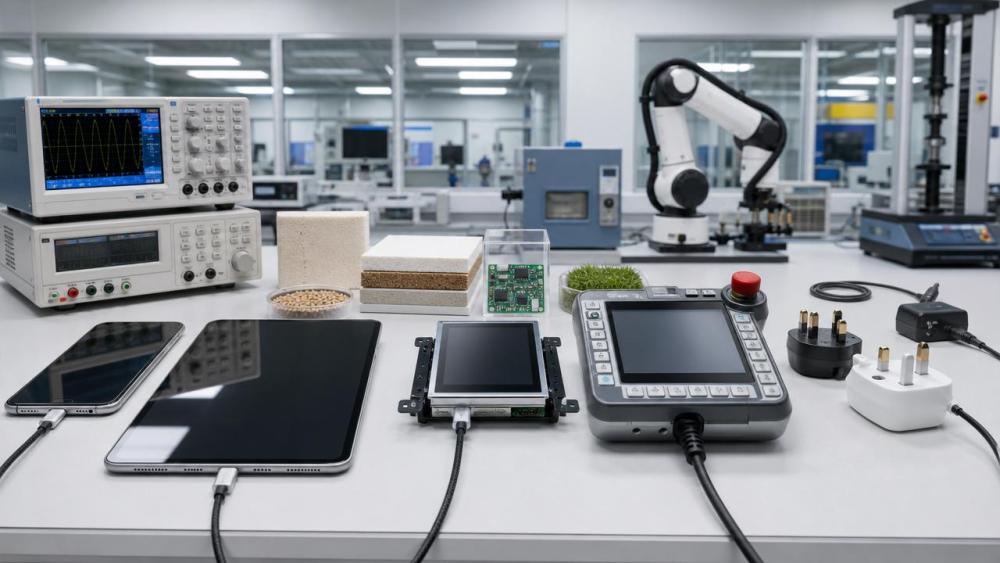
On March 24, 2026, Kenya introduced a mandatory USB Type-C charging interface requirement for newly certified mobile cellular devices, affecting smartphones, tablets, embedded HMI terminals, delta robot teach pendants, and related automation equipment because new type approval applications must align with updated interface, plug, frequency compatibility, and environmental compliance requirements.
What the Kenyan Technical Specification Confirms
The Communications Authority of Kenya, known as CA, issued the 2026 Technical Specifications for Mobile Cellular Devices. According to the provided event summary, from March 24, 2026, newly submitted type approval applications for devices such as smartphones and tablets must use a detachable USB Type-C charging interface.
The specification also requires compliance with local Type G plug requirements, multi-band compatibility, and RoHS environmental requirements. The scope described in the provided information extends to embedded terminals, including human-machine interfaces used in smart food equipment and teach pendants for delta robots.
The provided summary states that the rule affects compliance adaptation for automation equipment exported from China to Kenya. No additional official source link, policy number, market figure, enterprise name, or implementation detail was provided in the input.
How the Rule May Affect Different Industry Participants
Direct export and trading companies
From an industry perspective, companies exporting covered devices or automation products to Kenya may be affected because new type approval applications must reflect the USB Type-C interface requirement and related local compliance conditions. The impact is likely to appear in product classification, certification document preparation, customs-facing commercial documentation, and contract delivery commitments.
These companies should pay close attention to whether a product is treated as a mobile cellular device, an embedded terminal, or a related device requiring type approval. They also need to review whether quotation terms, delivery schedules, and compliance declarations are consistent with the Kenyan requirements described in the specification.
Raw material and component procurement teams
Analysis shows that procurement teams may face changes in connector, charger, plug, and compliant material sourcing because the specification refers to detachable USB Type-C charging interfaces, Type G plugs, multi-band compatibility, and RoHS requirements. This may affect purchasing specifications for connectors, cables, power adapters, printed circuit board components, and compliant materials.
The relevant business steps include supplier screening, purchase order specifications, incoming quality inspection, and environmental compliance file collection. Procurement teams should monitor whether suppliers can provide components that support USB Type-C design, Type G plug adaptation, and RoHS-related documentation.
Processing and manufacturing enterprises
Manufacturers may be affected at the design, assembly, testing, labeling, and technical documentation stages. For products such as smart equipment HMI units and delta robot teach pendants, interface layout, detachable charging design, power accessory matching, and radio-frequency compatibility may need to be reviewed before type approval submission.
What deserves closer attention is the link between product engineering and certification readiness. If product hardware, enclosure design, or terminal interface structure does not match the new requirement, manufacturers may need to adjust design files, bill of materials, inspection procedures, and test reports before shipment or certification application.
Supply chain and compliance service providers
Supply chain service providers, including logistics coordinators, certification support teams, testing coordinators, and after-sales service partners, may be affected because the rule adds compliance checkpoints before market access. Their work may involve document coordination, sample delivery for testing, shipment schedule alignment, and traceability support.
Observably, service providers should watch for changes in certification execution practices, technical tender requirements, and buyer documentation requests. They may also need to help clients distinguish between existing products and newly certified devices subject to the March 24, 2026 requirement.
Compliance Priorities for Companies Preparing Shipments
Recheck type approval files before submission
Companies preparing new type approval applications for the Kenyan market should review whether product descriptions, technical drawings, interface specifications, and user documentation clearly reflect a detachable USB Type-C charging interface where applicable. The review should also consider Type G plug adaptation, multi-band compatibility, and RoHS-related statements.
Align embedded terminal specifications with product design
For smart food equipment HMI terminals, delta robot teach pendants, and similar embedded terminals, manufacturers should confirm whether the terminal design falls within the scope described in the updated technical specification. If the terminal is part of a larger automation system, the interface, power accessory, and communication design should still be checked against the device-level compliance requirement.
Update procurement and supplier qualification criteria
Procurement teams should ensure that connectors, chargers, plugs, and related components are sourced under specifications that support USB Type-C and Type G plug requirements where relevant. Supplier qualification files should include appropriate technical and environmental compliance records, especially for RoHS-related review.
Build delivery plans around certification readiness
Exporters should avoid treating certification as a final paperwork step. The March 24, 2026 effective date for newly certified devices means that product design, sample preparation, testing documentation, and buyer communication should be aligned before shipment planning. This is especially important when tender documents or customer specifications reference Kenyan type approval requirements.
Industry View: A Small Interface Rule With Wider Compliance Effects
Analysis shows that the Kenyan requirement is more than a charging connector update. It links interface standardization with type approval, local plug compatibility, frequency support, and environmental compliance. For automation equipment exporters, this may increase the need to coordinate engineering, procurement, certification, and after-sales documentation at an earlier stage.
From an industry perspective, it is more appropriate to understand this as a market-access alignment issue rather than only a hardware replacement issue. The inclusion of embedded terminals such as HMI units and robot teach pendants suggests that industrial devices connected to communication or charging functions may receive closer compliance attention in future certification reviews.
What deserves closer attention is the possible impact on technical tender alignment and customer acceptance requirements. Without inventing additional rules or timelines, companies can reasonably expect buyers and certification partners to ask for clearer evidence of USB Type-C interface design, Type G plug suitability, multi-band compatibility, and RoHS-related compliance.
Measured Outlook for Export Compliance
Kenya's new USB Type-C requirement for newly certified devices highlights the growing importance of interface standardization and environmental compliance in market-access rules. For manufacturers and exporters of mobile devices, embedded HMI terminals, and automation control terminals, the practical significance lies in earlier compliance planning and tighter coordination across design, sourcing, certification, and delivery.
The impact should not be overstated beyond the provided information, but companies serving the Kenyan market should treat the rule as a concrete certification requirement for new applications from March 24, 2026. Continued monitoring of implementation details and certification review practices remains necessary.
Basis of This Article and Items to Monitor
This article is based on the user-provided news title, event date, and event summary concerning the Communications Authority of Kenya and the 2026 Technical Specifications for Mobile Cellular Devices.
For events of this type, relevant source categories usually include official regulator notices, technical specifications, conformity assessment guidance, type approval instructions, certification body communications, and buyer-side tender documents. Specific official source links were not provided in the input and should be verified continuously.
Follow-up monitoring should focus on detailed implementation guidance, certification execution practices, treatment of embedded terminals, changes in tender documentation, buyer compliance clauses, testing report expectations, and industry feedback from affected exporters and service providers.
Related News
 Delta Robot Lead Times Stretch to 26 WeeksDelta Robot lead times have stretched to 26 weeks, putting food sorting, MAP packaging, and sauce filling projects at risk. See what the IFR report means for delivery, integration, and factory launch plans.
 Delta Robot Lead Times Stretch to 26 Weeks as Food Sorting Projects SlipDelta Robot lead times have stretched to 26 weeks, delaying food sorting and slicing projects. Learn how IP69K shortages are impacting procurement, automation timelines, and plant launch plans.
 Delta Robot Sorter Meets FDA 21 CFR Part 11Delta Robot Sorter meets FDA 21 CFR Part 11 in this key update on D-TRAK 5.3. See why compliant food sorting systems can unlock HACCP projects and U.S. retail supply chain access.
 Delta Food-Sorting Robots Gain FDA 21 CFR Part 11 ComplianceDelta Food-Sorting Robots Gain FDA 21 CFR Part 11 Compliance, helping food processors strengthen traceability, audit readiness, and MES integration while reducing compliance barriers.
![]() Finland to Apply €3 Duty on Low-Value Non-EU ParcelsFinland to Apply €3 Duty on Low-Value Non-EU Parcels from July 2026. Learn how this customs change may raise landed costs, affect direct-mail equipment sales, and reshape buyer decisions.
Finland to Apply €3 Duty on Low-Value Non-EU ParcelsFinland to Apply €3 Duty on Low-Value Non-EU Parcels from July 2026. Learn how this customs change may raise landed costs, affect direct-mail equipment sales, and reshape buyer decisions. Delta Robot Lead Times Extend to 18 Weeks as Harmonic Drive Shortage PersistsDelta Robot lead times extend to 18 weeks as the harmonic drive shortage persists, disrupting pick-and-place projects, delivery schedules, and sourcing plans. See key risks and next steps.
 Delta Robot Lead Time Extends to 18 WeeksDelta Robot lead time extends to 18 weeks as harmonic reducer shortages disrupt packaging, sorting, and aseptic filling projects. See key risks, affected regions, and practical next steps.
 Delta Robot Lead Times Stretch to 18 WeeksDelta Robot lead times stretch to 18 weeks as harmonic reducer shortages tighten supply. Learn how ISO 10218-1:2023, sourcing shifts, and compliance risks may impact projects.
 Kenya Sets USB-C Rule for New Device ApprovalsKenya USB-C rule for new device approvals reshapes compliance for mobile devices, HMI terminals and automation exports. Learn key risks and preparation steps.
 Is food production automation worth the upfront investment?Food production automation can justify upfront capex when it cuts labor risk, waste, downtime, and quality losses. Learn how finance teams evaluate ROI, payback, and investment readiness.
![]() Canton Fair Phase III Closes: New Energy Appliances, Smart Food Equipment Lead DealsNew energy appliances & smart food equipment drove deals at Canton Fair Phase III—discover how AI matching, regulatory readiness, and Belt and Road demand are reshaping global sourcing.
Canton Fair Phase III Closes: New Energy Appliances, Smart Food Equipment Lead DealsNew energy appliances & smart food equipment drove deals at Canton Fair Phase III—discover how AI matching, regulatory readiness, and Belt and Road demand are reshaping global sourcing.![]() Fox ESS Tops Global Home Energy Storage; AI Delta Robot Line Sets New Benchmark for Food Packaging FlexibilityFox ESS AI Delta robot line redefines food packaging flexibility—120 cpm, ±0.1 mm precision, ISO 13849 PL e certified. Key for ASEAN MAP lines.
Fox ESS Tops Global Home Energy Storage; AI Delta Robot Line Sets New Benchmark for Food Packaging FlexibilityFox ESS AI Delta robot line redefines food packaging flexibility—120 cpm, ±0.1 mm precision, ISO 13849 PL e certified. Key for ASEAN MAP lines.