China Mandates Thermal Pump Efficiency Certification for Export Vacuum Freeze Dryers
Effective May 28, 2026, China’s General Administration of Customs (GACC) and the National Energy Administration jointly issued the Interim Guidelines for Energy Efficiency Filing of Low-Temperature Equipment for Food Industry Exports, requiring mandatory thermal performance filing for all exported vacuum freeze dryers. This regulation directly affects manufacturers, exporters, and supply chain service providers in food processing, biopharmaceuticals, and functional food sectors — as it introduces new pre-shipment technical verification requirements with immediate operational implications.
Event Overview
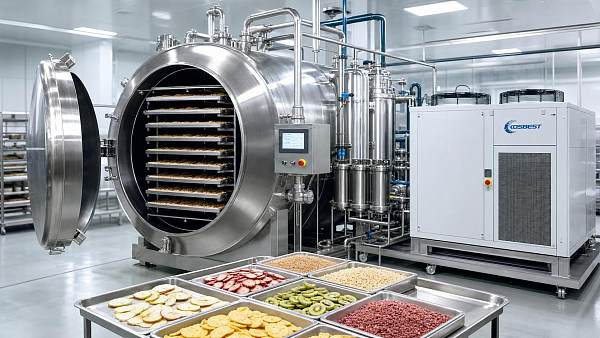
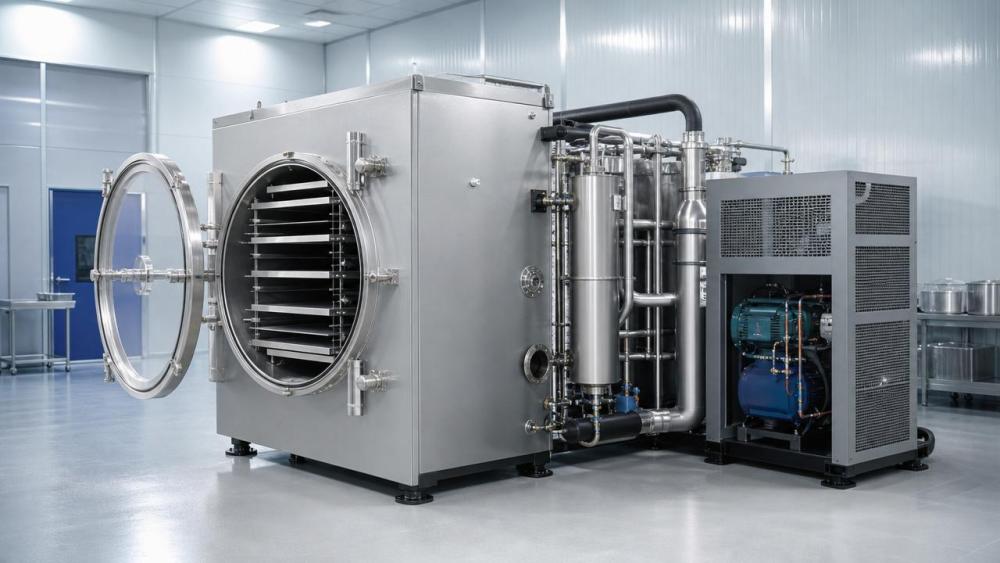
On May 28, 2026, the General Administration of Customs of the People’s Republic of China and the National Energy Administration released the Interim Guidelines for Energy Efficiency Filing of Low-Temperature Equipment for Food Industry Exports. The guideline mandates that all vacuum freeze dryers destined for export must submit six verified thermodynamic performance test reports prior to customs declaration — including cold trap frost accumulation rate, heat pump coefficient of performance (COP) ≥ 3.2, and vacuum pump pumping speed decay curve. Exporters must also register equipment data on the ‘Green Equipment Export Traceability Platform’. The policy took effect immediately upon publication; within its first week, 17 exporting enterprises reported delays in shipment schedules.
Industries Affected by the Regulation
Export Trading Enterprises
Export trading enterprises handling vacuum freeze dryers are directly subject to the filing requirement. Since the regulation applies at the point of customs declaration, these firms now bear responsibility for verifying and submitting technical documentation — even if they do not manufacture the equipment. Delays may arise from incomplete or non-compliant test reports, affecting delivery timelines and contractual obligations.
Equipment Manufacturing Enterprises
Manufacturers of vacuum freeze dryers must now generate and maintain standardized thermodynamic test reports for each export unit or model batch. The COP ≥ 3.2 threshold specifically targets heat pump subsystems — meaning legacy or non-optimized thermal designs may require revalidation or engineering adjustments before export clearance.
Supply Chain & Compliance Service Providers
Third-party testing labs, certification bodies, and logistics compliance consultants are seeing increased demand for thermodynamic validation support and platform registration assistance. However, only test reports from laboratories accredited under China’s CNAS system (or equivalent internationally recognized schemes) are accepted — narrowing the pool of eligible service providers.
What Enterprises and Practitioners Should Monitor and Do Now
Track official clarifications on scope and exemptions
The Interim Guidelines refer to ‘vacuum freeze dryers used in food industry applications’ — but do not yet specify whether laboratory-scale units, refurbished equipment, or dual-use (food/pharma) models fall under the mandate. Enterprises should monitor GACC’s upcoming Q&A notices or supplementary circulars for definitional clarity.
Verify test report validity and platform integration readiness
Submitted reports must include six specified thermodynamic parameters, all measured under defined ambient and load conditions. Enterprises should confirm whether their current testing protocols align with the guideline’s methodology annexes — and whether their ERP or export management systems can interface with the Green Equipment Export Traceability Platform’s API or upload interface.
Distinguish between regulatory signal and enforceable requirement
This is an interim guidance, not a formal administrative regulation. While enforcement has begun, penalties, grace periods, or transitional arrangements have not been publicly detailed. Companies should treat initial filings as operational pilots — documenting submission outcomes and feedback from customs authorities to inform internal process refinement.
Prepare for upstream coordination with component suppliers
Meeting the COP ≥ 3.2 requirement depends heavily on heat pump module specifications. Manufacturers should proactively engage compressor, condenser, and expansion valve suppliers to obtain updated performance datasheets — especially for units assembled after May 2026 — to avoid last-minute design or sourcing bottlenecks.
Editorial Observation / Industry Perspective
Observably, this measure signals a broader shift toward embedding energy efficiency verification into China’s export control framework — extending beyond traditional safety or EMC standards. Analysis shows the focus on real-world thermodynamic behavior (e.g., frost accumulation rate, pump decay curves) reflects growing attention to operational sustainability, not just nameplate ratings. From an industry perspective, it is more accurately understood as an early-stage regulatory signal than a fully matured compliance regime — given its interim status, limited public implementation guidelines, and absence of published penalty structures. Continued monitoring of GACC’s enforcement patterns over the next quarter will be critical to assess whether this evolves into a de facto market access gate.
Conclusion: This filing requirement marks the first known instance of mandatory thermal performance disclosure for a specific food-industry equipment category in China’s export controls. Its immediate impact lies in procedural friction rather than market exclusion — but its long-term significance rests in how consistently and scalably it is applied across related low-temperature equipment categories. Currently, it is best understood as a targeted pilot initiative with sector-specific enforcement, rather than a broad-based policy transformation.
Source: General Administration of Customs of the People’s Republic of China and National Energy Administration — Interim Guidelines for Energy Efficiency Filing of Low-Temperature Equipment for Food Industry Exports (issued May 28, 2026).
Further observation required regarding: (1) formal definition of covered equipment scope; (2) acceptance criteria for foreign-accredited test reports; (3) timeline for potential transition rules or penalty provisions.
Related News
 How Freeze Drying Technology for Coffee Preserves Aroma and Improves Shelf LifeDiscover how freeze drying technology for coffee preserves aroma, improves shelf life, and supports premium quality with smart processing and packaging insights.
 FDA Sets CIP/SIP Flow Validation Rule for 2026FDA Sets CIP/SIP Flow Validation Rule for 2026: learn how the new FDA update impacts food equipment exports, EHEDG 42:2025 compliance, supplier audits, and U.S. market readiness.
 How to Choose Stainless Steel Deboning Equipment for Throughput, Hygiene, and YieldStainless steel deboning equipment buying guide: learn how to balance throughput, hygiene, and yield to cut downtime, protect food safety, and improve processing profits.
 EU Tightens MAP Gas Certification From October 2026EU Tightens MAP Gas Certification From October 2026: learn how EN 14185-2:2026, traceable batch data, and stability reports will impact MAP suppliers, importers, and market access.
 Vacuum Freeze Drying for Probiotics: Process Basics, Benefits, and Key LimitsVacuum freeze drying for probiotics explained: learn process basics, key benefits, major limits, and how to evaluate viability, cost, packaging, and scale-up before choosing this method.
 FDA Expands 3A Mutual Recognition for Food Machinery SealsFDA expands 3A mutual recognition for food machinery seals, reshaping U.S. compliance for sanitary equipment. Learn the impact on exporters, buyers, and certification workflows.
 How to Evaluate a Bottle Filling Equipment Manufacturer for Accuracy, Hygiene, and ThroughputBottle filling equipment manufacturer selection starts with proven accuracy, hygienic design, and sustainable throughput. Learn what to verify before you buy with this practical guide.
 EU Rule Sets MAP Sensor Requirement for ImportsEU Rule Sets MAP Sensor Requirement for Imports: learn how the new EU MAP equipment rule impacts CE compliance, validation data, delivery timelines, and supplier readiness before August 1, 2026.
 Commercial Food Processing Hygiene Checklist for Audits, Zoning and Allergen ControlCommercial food processing hygiene checklist for audits, zoning, and allergen control. Learn practical steps to improve compliance, reduce risk, and strengthen plant performance.
 High Efficiency Food Manufacturing: Where Throughput Gains Offset Equipment CostHigh efficiency food manufacturing turns equipment cost into margin through higher throughput, lower waste, better hygiene, and longer shelf life. See what drives faster ROI.
 Dough Processing Machinery for Pizza: What to Compare Before Choosing a LineDough processing machinery for pizza: compare dough handling, sanitation, throughput, flexibility, and operating cost before choosing a line that protects quality and boosts ROI.
 Energy Efficient Vacuum Drying: Key Parameters, Limits and Best-Fit MaterialsEnergy efficient vacuum drying explained: learn the key parameters, practical limits, and best-fit materials to improve product quality, sanitation, and operating efficiency.