Keg Filling Machines: Hygiene and Output Checks for Beverage Plants
Byline: Editorial Desk, Beverage Processing Equipment Review
Review Note: Prepared as a practical procurement article for beverage plant managers comparing keg washing and filling equipment.
Keg filling looks simple from the outside: a clean keg arrives, product enters the container, and the line sends the keg onward for storage or distribution. In real beverage production, however, the details around washing, purging, filling control, foaming, operator handling, and output balance determine whether the equipment supports stable daily production or becomes a recurring bottleneck. For buyers searching for remplisseuse de fût, the practical question is not only whether a machine can fill a keg. The more useful question is whether the machine can help a plant keep every keg clean, correctly pressurized, accurately filled, and ready for a predictable downstream workflow.
This guide explains how beverage producers can evaluate keg filling machines before purchase. It focuses on hygiene, production output, container compatibility, cleaning logic, and operational checks that matter to breweries, cider plants, sparkling beverage producers, kombucha facilities, and other beverage processors that handle stainless steel kegs. The goal is to give procurement teams a grounded checklist, not a generic equipment description.
Why Keg Filling Requires More Than a Basic Filling Head
A keg is a reusable pressure container, so the filling process must protect both product quality and container safety. A plant may be filling beer, sparkling wine, cider, carbonated soft drinks, or another beverage that is sensitive to oxygen pickup, microbial contamination, carbonation loss, or foaming. That means the machine should be considered as part of a controlled hygiene and packaging system rather than a stand-alone dispenser.
In a small operation, operators may manually rinse, inspect, fill, and move kegs. As demand grows, manual work can become uneven. One shift may clean longer than another. One operator may vent too quickly. Another may allow too much foam, causing underfilling or product loss. A well-specified keg filling machine reduces this variation by standardizing the process steps and giving operators a clearer sequence to follow.
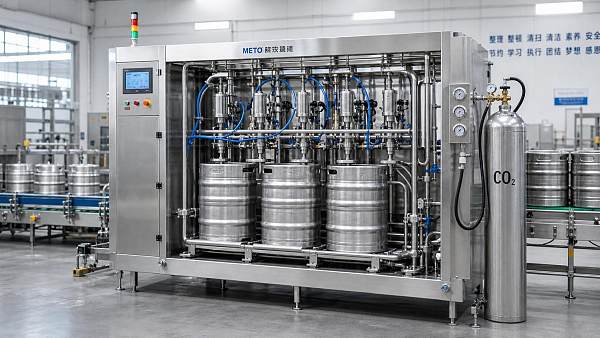
Buyers should therefore look at each step that happens before, during, and after filling. The machine should support cleaning or connection to a cleaning process, CO2 or sterile air purging where the beverage requires it, controlled product filling, pressure handling, and drainage management. The details vary by product and plant layout, but the evaluation logic is similar: protect the beverage, protect the keg, and make the line manageable for the production team.
Core Hygiene Checks Before Comparing Machine Output
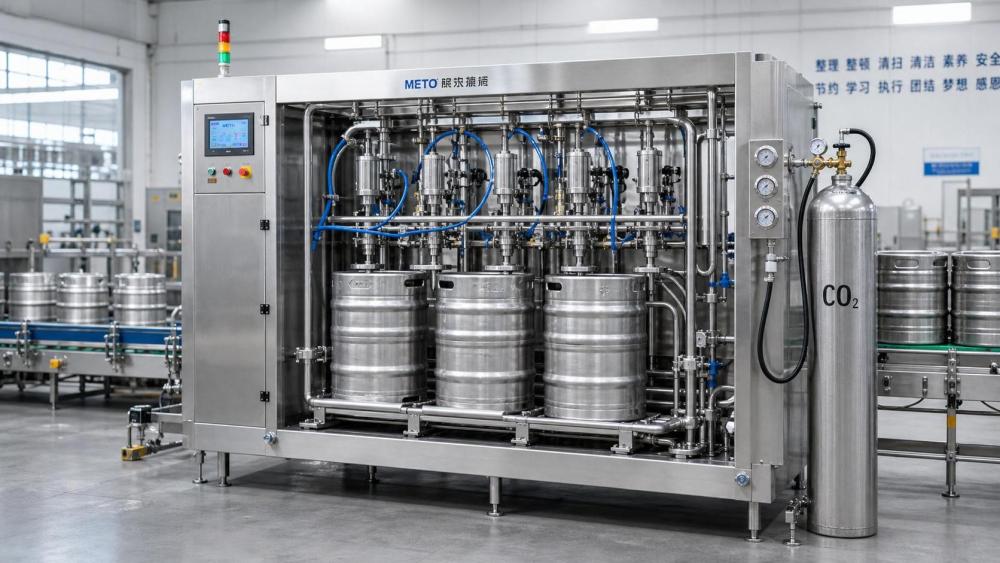
Hygiene is the first checkpoint because a fast machine that fills poorly cleaned kegs creates a quality risk. Before discussing output per hour, buyers should ask how the equipment handles internal contact surfaces, fluid paths, valves, gaskets, and operator access. Sanitary stainless steel construction is expected in this category, but the presence of stainless steel alone does not prove that the machine is suitable for daily beverage production.
The filling path should be easy to clean and inspect. Product-contact areas should avoid unnecessary dead corners. Drainage should be considered because retained water or cleaning liquid can dilute product or create hygiene concerns. Where steam, hot water, caustic solution, sanitizer, or sterile water is part of the plant process, the machine layout should allow these media to move through the intended path without leaving hidden residues.
Plants that use the same line for different products should pay special attention to changeover cleaning. A brewery switching between beer styles may have different risk levels than a beverage plant switching from a sugary drink to a lightly flavored beverage. In both cases, cleaning repeatability matters. Operators should be able to follow the same cleaning steps without improvising every time the product changes.
Output Planning: Match the Filler to the Real Production Day
Equipment buyers often ask for a simple hourly capacity figure. That number is useful, but it does not describe the full production day. Real output depends on keg size, product carbonation, foam behavior, cleaning cycle length, operator loading speed, drain time, pressure stabilization, and whether upstream product supply can keep pace with the filler. A published capacity figure should therefore be treated as a starting point for discussion.
A plant should calculate target output from actual order patterns. For example, a facility that fills many small batches may lose more time to changeovers than a facility that fills one large batch. A plant that processes heavily carbonated product may need a more cautious filling speed than one filling a still beverage. If the keg washer and filler are separate, both sides must be balanced. A fast filler cannot solve a slow washing step, and a fast washer cannot compensate for inconsistent product feed.
When reviewing a keg filling machine, buyers should ask for a realistic process explanation based on their keg type, product characteristics, cleaning requirement, and daily shift plan. The right machine is not always the largest model. It is the model whose process rhythm fits the plant's labor, cleaning discipline, and packaging schedule.
Procurement Checklist for Beverage Plants
Questions to Ask Suppliers Before Ordering
A supplier discussion should go beyond price and nominal capacity. Buyers using the term remplisseuse de fût should request a process explanation that matches their beverage category. They should ask how the machine handles foam, what cleaning steps are recommended, which parts need routine replacement, and what utilities must be prepared before installation. If the equipment will be used for export-focused production, documentation and operator training should also be discussed early.
Useful questions include: Can the machine support the keg sizes used by the plant? How is fill volume controlled? How does the system reduce oxygen pickup for sensitive products? What cleaning steps are manual and what steps are automated? How long does a typical changeover take? Which product-contact parts should be inspected regularly? What installation space is required around the machine for operation and maintenance?
Buyers should also confirm whether the remplisseuse de fût is intended for a stand-alone filling station, a combined washing and filling workflow, or integration into a larger packaging line. The answer affects floor layout, drainage, operator movement, and future expansion. Planning these points before purchase is usually easier than solving them after the equipment arrives.
Common Specification Mistakes
One common mistake is buying only for today's output without considering near-term growth. If the plant expects more keg volume within the next production season, it may be worth choosing a configuration that can support longer shifts or smoother integration with upstream and downstream equipment. Another mistake is ignoring the cleaning workflow. If cleaning is awkward, operators may take shortcuts, and those shortcuts can create quality risk.
A third mistake is comparing machines only by the number of filling heads. More heads can increase capacity, but only if the plant can feed, clean, load, unload, and inspect kegs at the same pace. The best purchasing decision balances capacity with hygiene control, maintenance access, operator training, and utility readiness.
FAQ
Is a keg filling machine suitable for both beer and other beverages?
It can be, depending on the beverage, carbonation level, cleaning requirements, and product-contact design. Buyers should confirm compatibility with the supplier rather than assuming one configuration fits every beverage.
Should output capacity be the first specification to compare?
Capacity is important, but hygiene sequence, filling control, keg compatibility, and line balance should be checked first. A high-capacity machine that does not fit the plant's process may create more downtime than expected.
What information should a buyer prepare before requesting a quotation?
Prepare keg sizes, spear types, target beverage, carbonation or pressure requirements, expected kegs per shift, cleaning media, available utilities, and layout limits. These details help suppliers recommend a more realistic configuration.
How can plants reduce hygiene risk during keg filling?
Use a repeatable cleaning sequence, inspect product-contact paths, train operators, confirm drainage, and document routine maintenance. Hygiene depends on equipment design and daily operating discipline working together.
Conclusion
Keg filling equipment should be evaluated as a hygiene and production-control system. Buyers comparing suppliers should look at the cleaning path, filling accuracy, pressure handling, utilities, changeover process, and line balance before focusing on headline capacity. A carefully matched machine helps beverage plants protect product quality, reduce avoidable product loss, and create a more predictable packaging workflow.
Related News
 FDA Tightens Validation for Imported Aseptic Fill LinesFDA tightens validation for imported aseptic fill lines, raising new expectations for challenge testing, hold-time checks, and fill-zone monitoring. See what exporters and beverage manufacturers must prepare now.
 Keg Filling Machines: Hygiene and Output Checks for Beverage PlantsA practical buyer guide to keg filling machine hygiene, filling accuracy, cleaning workflow, and output planning for beverage production lines.
 FDA Sets Final Aseptic Filling Rules for ImportsFDA final aseptic filling rules for imports reshape validation, audit, and shipping plans. Learn what beverage exporters and equipment suppliers must review before October 2026.
 Aseptic Food Packaging Systems Explained: Process Flow, Sterility Control, and LimitsAseptic food packaging systems explained: explore process flow, sterility control, validation points, and real operating limits to choose safer, more efficient packaging lines.
 FDA Tightens Validation for Aseptic Cold Filling ExportsFDA tightens validation for aseptic cold filling exports to the US. Learn how the new dual-report rule impacts beverage and dairy filling lines, compliance planning, and delivery readiness.
 FDA Sets Final Validation Rules for Imported Aseptic LinesFDA final validation rules for imported aseptic lines take effect July 1, 2026. See key compliance changes, risks, and what exporters and beverage brands must prepare now.
 FDA Tightens Rules for Imported Aseptic Filling LinesFDA tightens rules for imported aseptic filling lines, requiring third-party verification by Oct 1, 2026. Learn how the update affects exporters, buyers, compliance teams, and delivery timelines.
 Aseptic Packaging Integrity Testing: Key Failure Modes, Methods, and Compliance PointsAseptic packaging integrity testing explained: discover key failure modes, proven test methods, and compliance priorities to reduce risk, protect shelf life, and improve line confidence.
 Middle East Buyers Eye Integrated Freeze-Drying Lines at ProPak China 2026Middle East buyers eye integrated freeze-drying lines at ProPak China 2026, with rising demand for EHEDG-certified, aseptic cold filling systems, CIP/SIP automation, and MAP-compatible solutions.
 Aseptic Cold Filling Explained: Process Steps, Product Fit, and FDA Risk PointsAseptic cold filling explained: learn the key process steps, best-fit products, and FDA risk points to improve safety, shelf life, flavor protection, and audit readiness.
 Bottle Filling Machines vs Aseptic Cold Filling: Which Fits Your Product Best?Bottle filling machines or aseptic cold filling? Compare shelf life, flavor protection, hygiene demands, and cost to find the best fit for your beverage or liquid food line.
 Aseptic Cold Filling Draws Buyer Focus in ThailandAseptic Cold Filling draws buyer focus in Thailand as Southeast Asian importers compare accuracy, CIP/SIP validation, 3A documents, and local service support. See what this means for suppliers and buyers.